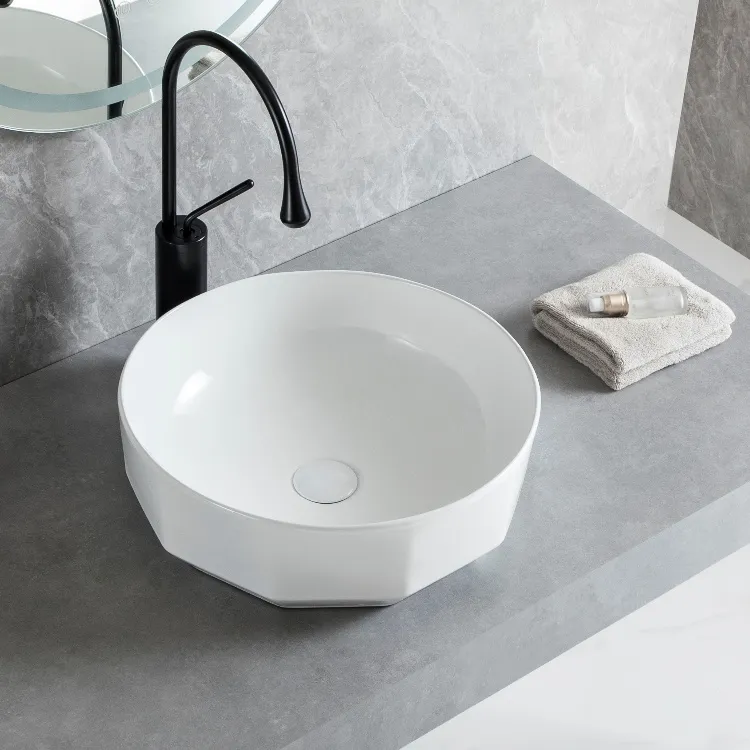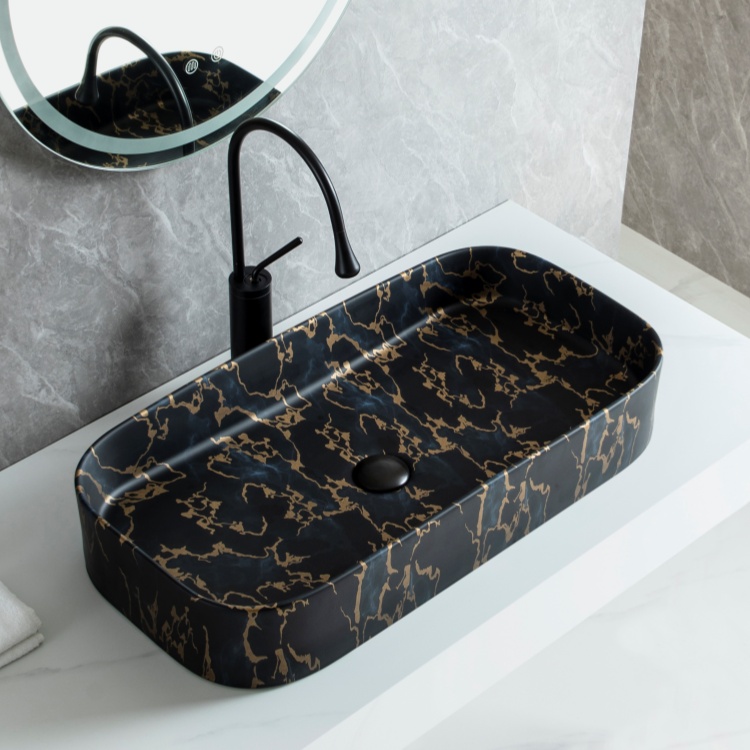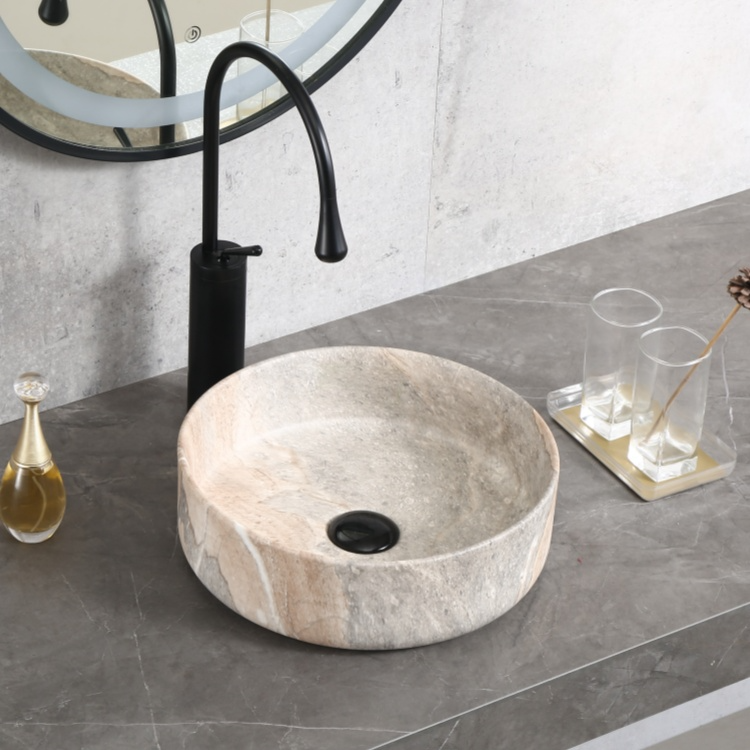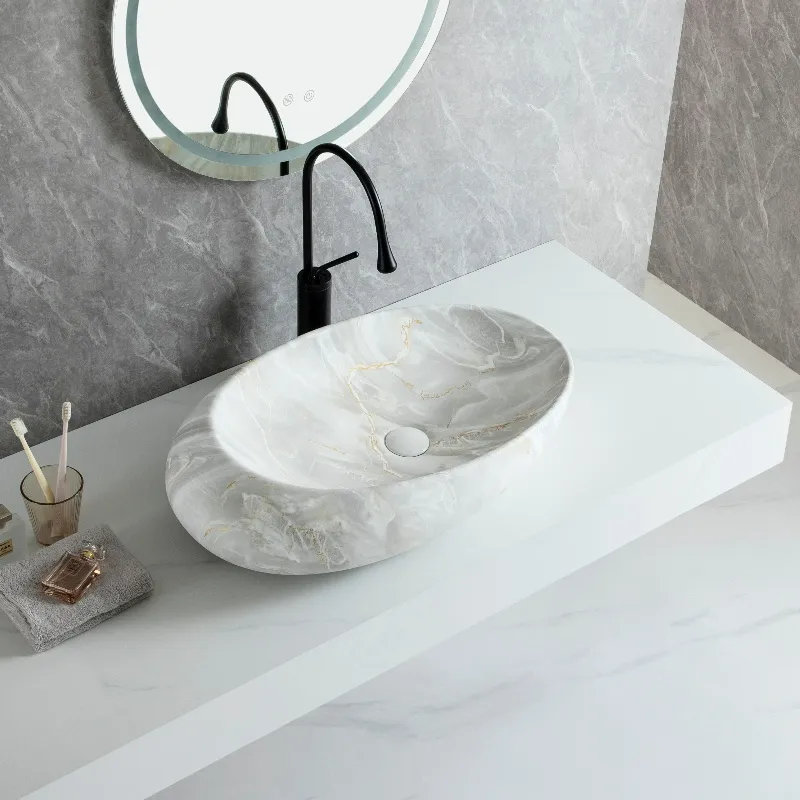

When renovating or replacing a bathroom sink, many homeowners face a common question: Are ceramic sinks and porcelain sinks actually different? They often look almost identical, yet their prices and performance can vary significantly.
For distributors, importers, bathroom brands, and project buyers, understanding this distinction is equally important. Material composition, firing temperature, water absorption, durability, and surface quality can all affect product positioning and long-term performance.
In this guide, we explain the relationship between ceramic and porcelain sinks and introduce 5 easy self-test methods that can help identify the material without professional equipment.
A porcelain sink is a type of high-density ceramic product. The most useful ways to distinguish porcelain from ordinary ceramic are water absorption, body density, cross-section appearance, surface finish, and manufacturing specifications.

Porcelain vs Ceramic Sinks: Understanding the Core Difference
First, let’s correct a common misunderstanding: porcelain is not a completely separate material from ceramic. Instead, porcelain is generally considered a refined type of ceramic made from carefully selected raw materials and fired at a higher temperature.
What Are Ceramic Sinks?
Ordinary 세라믹 싱크대 are generally produced from clay and mineral-based raw materials. Depending on the formulation and manufacturing process, they may be fired at different temperatures and can have varying levels of density and water absorption.
For sanitaryware applications, the glaze plays an important role in creating a smooth, hygienic, and water-resistant surface.
What Is a Porcelain Sink?
A porcelain sink, particularly high-temperature porcelain or vitreous-china-type sanitaryware, is made from carefully processed ceramic raw materials and fired at high temperatures. The resulting body is highly vitrified and has very low water absorption.
This dense body provides good resistance to staining, moisture penetration, and everyday wear.
In simple terms:
Porcelain is a category of high-density ceramic, but not all ceramic sinks are porcelain.
For B2B buyers, however, it is important not to rely only on the word “porcelain” in a product name. Manufacturers should be able to provide technical specifications such as water absorption, firing temperature, material composition, and relevant quality standards.
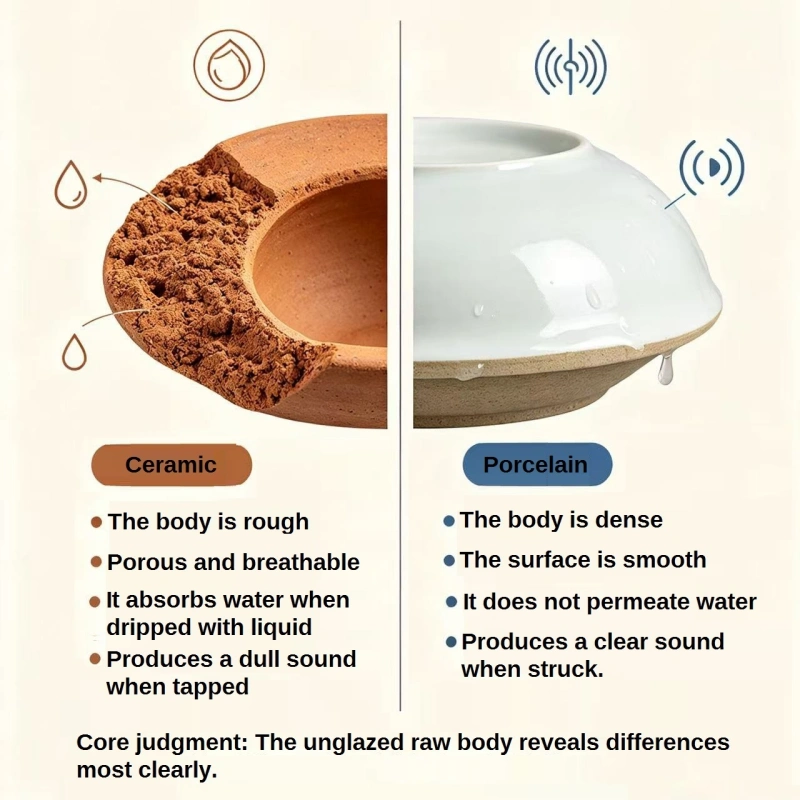
5 Easy Home Tests to Distinguish a Porcelain Sink
These five methods can provide useful clues when identifying an existing sink. However, visual and physical tests are not a substitute for manufacturer specifications or laboratory testing when exact material classification is required.
1. Check Light Transmission
Checking light transmission is one of the easiest ways to compare different ceramic bodies.
Find a relatively dark environment and place your mobile phone flashlight close to the thicker part of the sink body.
- Porcelain sink: A highly vitrified body may allow a small amount of soft, even light transmission depending on its thickness and formulation.
- Ordinary ceramic sinks: A denser or thicker conventional ceramic body may appear completely opaque.
Why does this happen?
The density, thickness, raw materials, and firing process of a ceramic body all influence how light passes through it. Because different manufacturers use different formulations, light transmission should be treated as a quick indication rather than a definitive material test.
2. Observe the Cross-Section
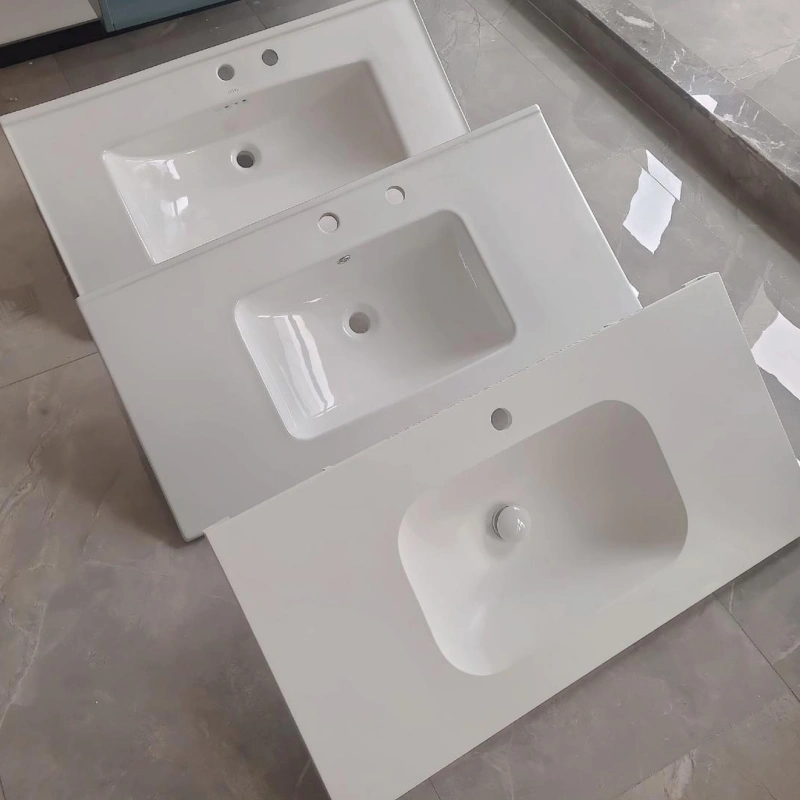
If an existing sink has a small chipped edge, drilled opening, or exposed section, the body can provide useful information.
Look closely at the exposed area:
- Porcelain sink: The body is generally fine, dense, and relatively uniform in color and texture.
- Ordinary ceramic sinks: The body may have a more visibly granular texture or a different base color depending on the clay and mineral formulation.
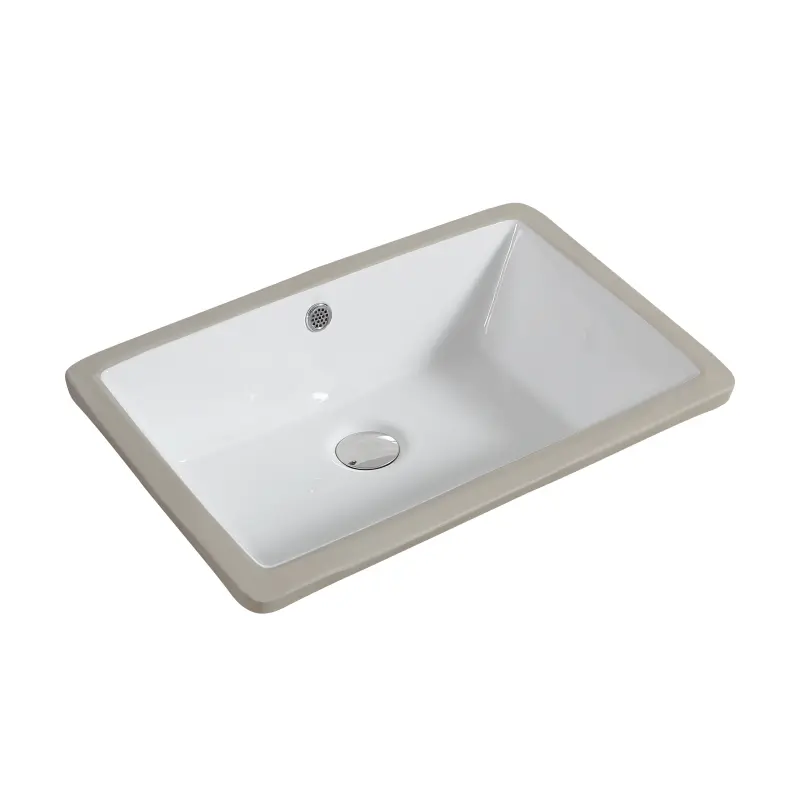
The exact color is not universal. White, cream, gray, and other body colors can be found across different ceramic products.
For B2B sourcing, therefore, body density and uniformity are more meaningful indicators than color alone.
3. Perform a Water Absorption Test
Water absorption is one of the most practical technical differences between different ceramic bodies.
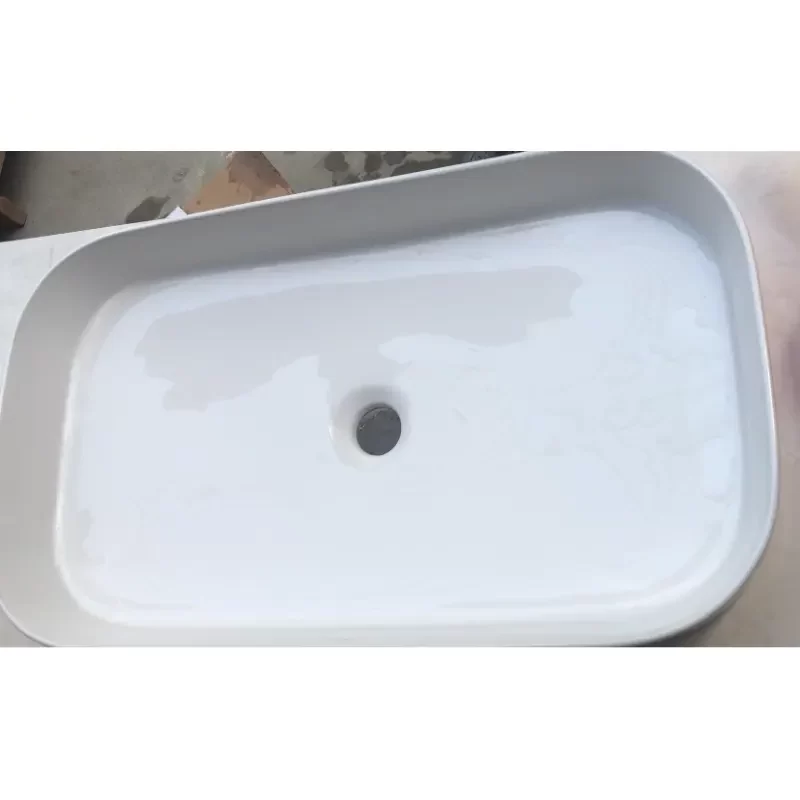
If there is an unglazed, exposed section of the sink, place a small drop of water on it and observe what happens over several minutes.
- Highly vitrified porcelain: The water should remain largely on the surface with little visible absorption.
- More porous ceramic bodies: Water may gradually penetrate the exposed body and cause temporary darkening.
The key principle is simple:
Lower water absorption generally indicates a denser and more highly vitrified ceramic body.
This property matters in bathroom applications because low water absorption can contribute to better resistance to moisture penetration and staining.
For professional purchasing, always ask the manufacturer for the actual water absorption specification rather than relying only on a home test.
4. Feel the Surface and Observe the Glaze
Run your hand gently over the sink surface and observe how it reflects light.
A high-quality porcelain sink may have:
- A smooth and refined glazed surface
- Consistent gloss or matte finishing
- Uniform light reflection
- A fine, clean touch
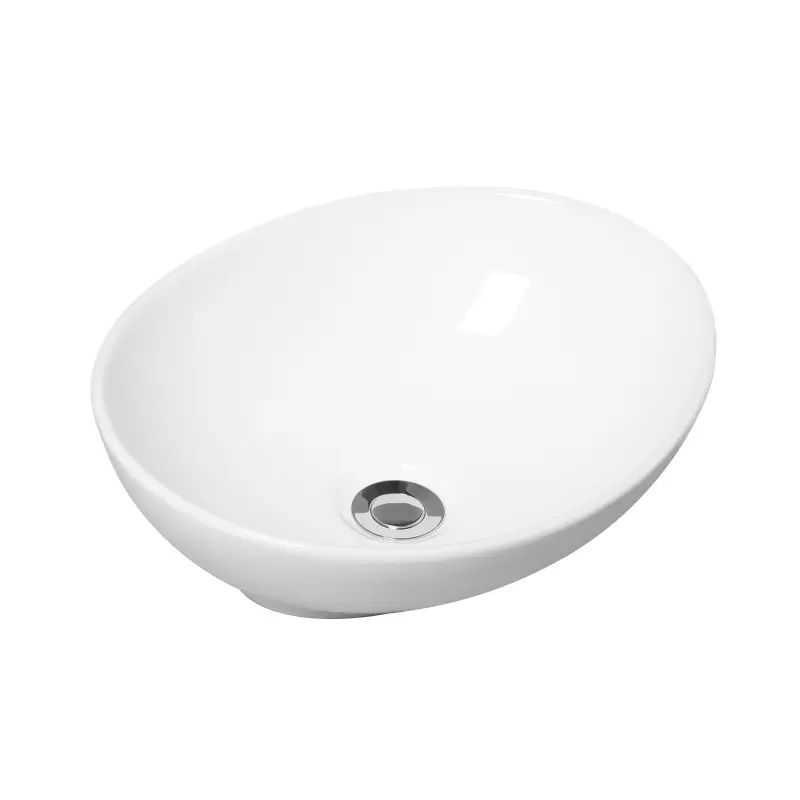
Other 세라믹 싱크대 can also have excellent glazed surfaces, so surface appearance alone cannot conclusively determine whether a product is porcelain.
In fact, glaze quality depends heavily on the formulation, application, firing process, and quality control of the manufacturer.
For wholesale buyers, this is why it is useful to evaluate both body material and glaze quality when comparing suppliers.
5. Listen to the Knocking Sound
Gently tap the sink body with your fingers and listen to the sound.
- Dense, highly vitrified ceramic or porcelain: It may produce a clearer and more resonant sound.
- More porous or less dense ceramic: It may produce a relatively duller sound.
This test is based on differences in body density and structure.
However, wall thickness, sink shape, installation conditions, and the location being tapped can all affect the sound. Therefore, this method should only be used as a supplementary test.
Ceramic Sinks vs Porcelain Sink: Core Comparison
For distributors, importers, bathroom brands, and construction projects, the following factors are more useful than appearance alone.
| Factor | Porcelain Sink | 세라믹 싱크대 |
|---|---|---|
| Raw materials | Carefully selected ceramic raw materials, often including kaolin-based formulations | Clay and mineral-based ceramic formulations |
| 해고 | Generally high-temperature firing | Depends on the ceramic body and manufacturing process |
| Body density | Highly vitrified and dense | Varies by formulation and firing |
| 수분 흡수 | Very low when properly vitrified | Varies according to body type |
| Surface | Smooth, refined, and available in various finishes | Can also provide smooth, durable glazed finishes |
| 얼룩 방지 | Generally excellent with a properly fired glaze and dense body | Depends on body and glaze quality |
| 내구성 | Suitable for demanding bathroom applications | Varies by product quality |
| Price | Often positioned in higher-value segments | Available across a wider price range |
| B2B application | Bathroom brands, distributors, hospitality and construction projects | Broad residential and commercial applications |
What Matters More Than the Word “Porcelain”?
For professional buyers looking for a wholesale ceramic bathroom sink, the product name alone should not determine purchasing decisions.
Ask suppliers for:
- 수분 흡수율
- 원료 조성
- 소성 온도
- Body density
- Glaze specifications
- 치수 허용 오차
- Glaze quality-control standards
- Impact and durability testing
- Available certifications
- OEM/ODM 기능
- Production capacity and MOQ
These specifications provide a much more reliable basis for supplier comparison.
Purchasing Tips: How to Avoid Material and Quality Confusion
Choose the Material According to the Application
Bathroom sinks are exposed to water, cleaning products, daily impacts, and frequent use. For commercial projects, hotels, residential developments, and retail bathroom brands, a dense and low-water-absorption ceramic body with a properly fired glaze is generally preferred.
For buyers sourcing 세라믹 싱크대, the key is not simply choosing the most expensive material. Instead, match the material specifications, surface finish, durability, design, and price with the target market.
Don’t Rely Only on a Supplier’s Sales Terminology
Some suppliers may use “ceramic basin,” “porcelain basin,” “ceramic sink,” or “porcelain sink” differently depending on their market and product terminology.
Before placing a wholesale order, ask:
- What is the exact body material?
- What is the water absorption rate?
- What is the firing temperature?
- What raw materials are used?
- What glaze process is used?
- Can the supplier provide technical specifications or test reports?
This is especially important when comparing products from different factories.
General Maintenance Tips
Whether you choose porcelain or other high-quality 세라믹 싱크대, avoid dropping heavy objects onto the surface or using sharp objects that may damage the glaze.
For daily cleaning:
- Use a soft cloth or sponge.
- Clean stains promptly.
- Avoid excessively aggressive abrasive cleaners.
- Follow the manufacturer’s recommended cleaning instructions.
- Avoid prolonged exposure to unsuitable strong acids or alkalis.
Proper maintenance can help preserve both the glaze and the appearance of the sink.
How to Choose a Wholesale Ceramic Bathroom Sink Supplier
For B2B buyers, product material is only one part of the sourcing decision.
신뢰할 수 있는 wholesale ceramic bathroom sink manufacturer should also be able to provide consistent quality across large production batches.
Before choosing a supplier, evaluate:
Product Consistency
The color, dimensions, glaze, drainage opening, installation structure, and surface quality should remain consistent from batch to batch.
제조 분야 경력
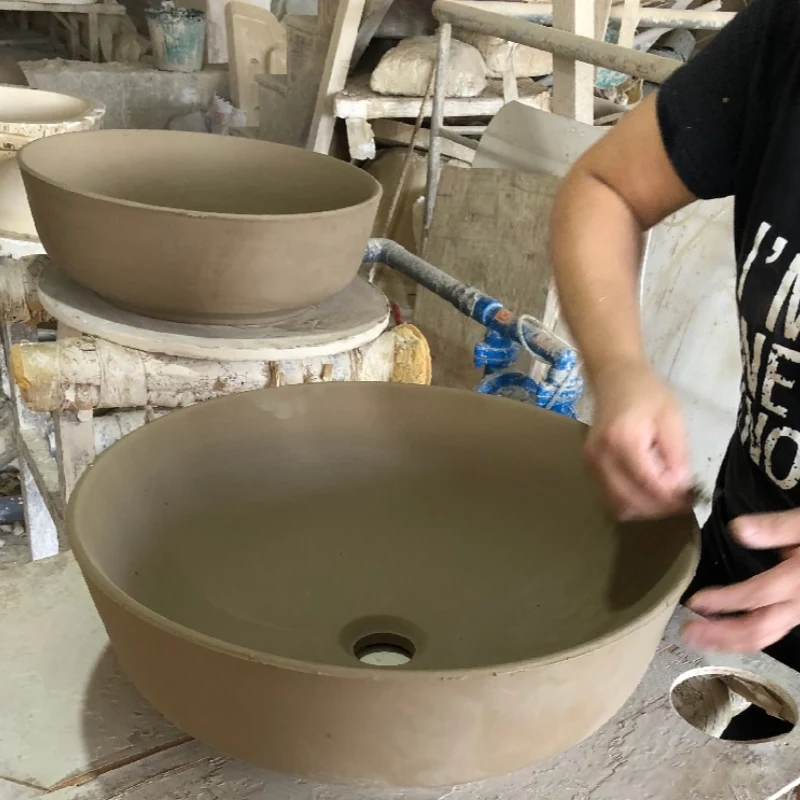
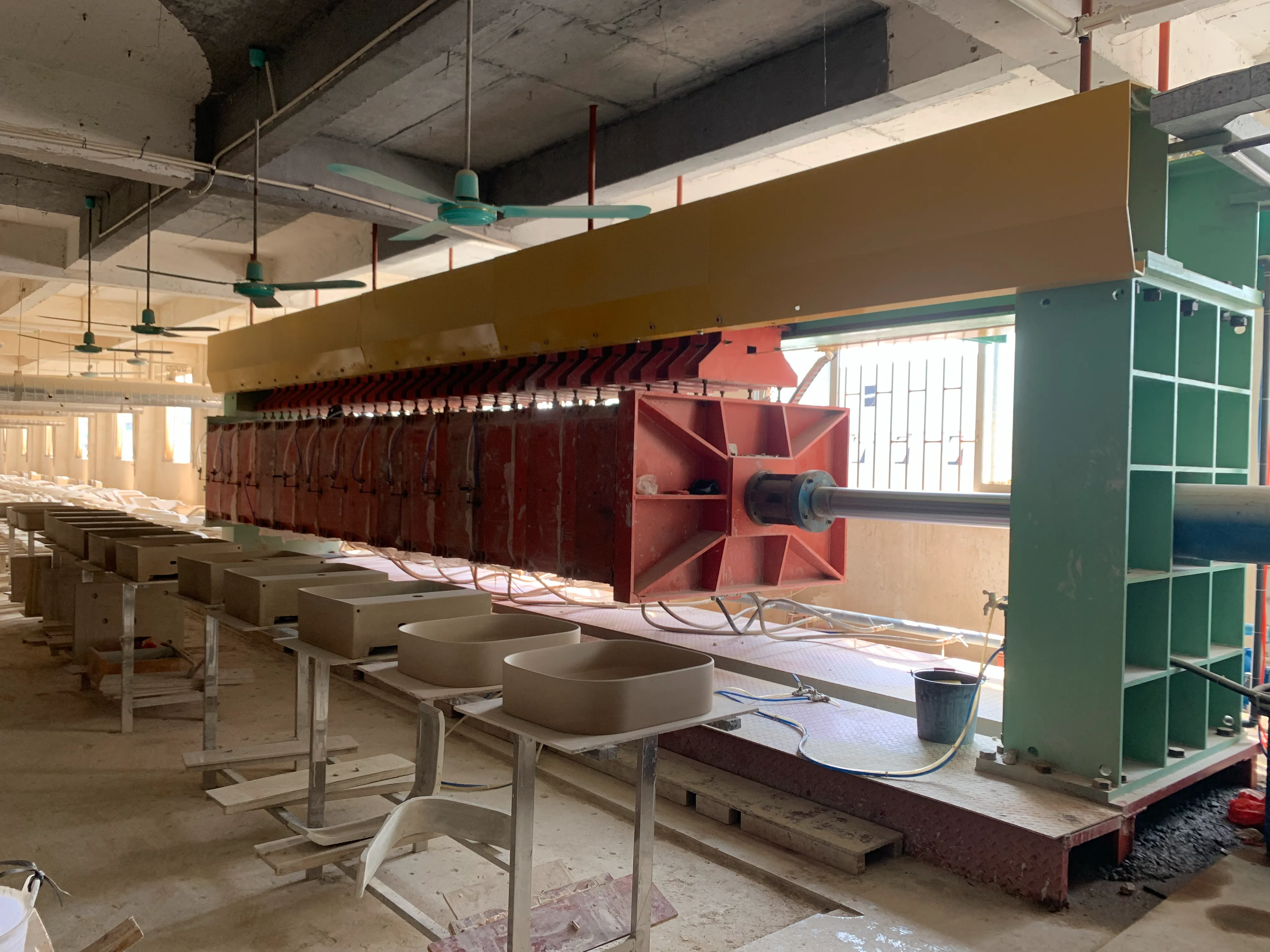
An experienced ceramic bathroom sink manufacturer should understand raw material preparation, molding, drying, glazing, firing, inspection, and packaging.
OEM/ODM 역량
Bathroom brands and project buyers may require customized dimensions, colors, finishes, logos, packaging, or designs. A supplier with established OEM/ODM capabilities can make the process easier.
품질 관리
Quality inspection should cover the ceramic body, glaze, dimensions, deformation, surface defects, drainage area, packaging, and final appearance.
Production and Export Capability
For distributors and importers, production capacity, lead times, export experience, packaging, and communication are also important factors when evaluating a supplier.


FAQ: Porcelain Sink and Ceramic Sink Questions
Is a porcelain sink the same as a ceramic sink?
Not exactly. Porcelain is generally considered a type of ceramic made with specific raw materials and manufacturing processes that produce a highly vitrified, low-water-absorption body. The terms can overlap in sanitaryware marketing, so technical specifications should be checked.
How can I tell if my sink is porcelain?
You can use several simple checks, including examining an exposed cross-section, observing water absorption, checking the surface finish, and listening to the tapping sound. However, these tests are only indicative. Manufacturer specifications provide a more reliable identification.
Does a porcelain sink absorb water?
A properly vitrified porcelain sanitaryware body has very low water absorption. The exact value depends on the product and applicable standard, so buyers should request the manufacturer’s water absorption specification.
Are porcelain sinks more durable than ceramic sinks?
Durability depends on the ceramic body, glaze, firing process, design, and quality control. A high-quality porcelain or highly vitrified ceramic sink can provide excellent durability for bathroom applications.
Are ceramic sinks suitable for wholesale bathroom projects?
Yes. High-quality 세라믹 싱크대 are widely used in residential, hospitality, commercial, and construction projects. For B2B buyers, the most important factors are material specifications, water absorption, glaze quality, dimensional consistency, durability, and supplier reliability.
What should I ask a supplier before buying wholesale ceramic bathroom sinks?
Ask about the body material, water absorption rate, firing temperature, glaze process, dimensions, quality-control procedures, MOQ, production capacity, packaging, OEM/ODM options, and export experience.
Summary: How to Quickly Distinguish Porcelain and Ceramic Sinks
A simple way to remember the five tests is:
Low water absorption + dense body + fine texture + consistent glaze + clear resonance = signs of a highly vitrified ceramic or porcelain sink.
However, no single home test can definitively identify the material. For professional purchasing decisions, technical specifications and manufacturer documentation should always take priority over visual inspection alone.
For distributors, importers, bathroom brands, and construction projects, choosing the right supplier is just as important as choosing the right material.
Partner with HanYu for Wholesale Ceramic Bathroom Sink Solutions
한유 위생 Ware is an experienced 세라믹 욕실 싱크 제조업체 established in 2002, with years of experience in bathroom sink manufacturing and wholesale supply. HanYu has built a strong market presence in countries including South Korea, Brazil, the Netherlands, and Singapore.
당사는 다음을 제공합니다. OEM/ODM bathroom sink solutions for global brands, distributors, importers, and building projects, with flexible options for product design and customization.
If you are sourcing reliable ceramic sinks, looking for a high-quality porcelain sink, or need a long-term wholesale ceramic bathroom sink manufacturing partner, contact HanYu to discuss your product requirements and build a bathroom sink solution for your market.