
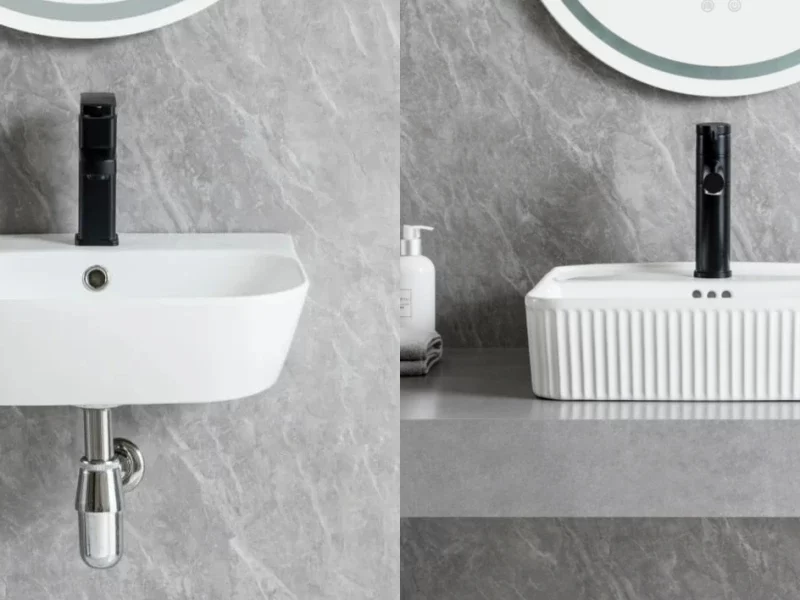
Excerpt: A wall-hung basin is installed directly on the wall, while a countertop basin sits on a countertop or vanity. The right choice depends on bathroom layout, installation requirements, storage needs, and overall design direction.
For bathroom brands, wholesalers, hotel projects, and construction buyers, choosing the right basin is not only about appearance. The basin type also affects installation methods, product positioning, and project efficiency.
When developing new bathroom collections or sourcing products in bulk, many buyers compare wall-hung basins and countertop basins.
Both are popular types of ceramic bathroom sinks, but they have significant differences in installation structure, space usage, support requirements, and project applications.
So, what are the key differences between Wall Hung Basin and Countertop Basin? Which option is more suitable for your project?
The answer is not simply about which one is better. The right choice depends on project requirements, installation conditions, and target market positioning.
What Is the Difference Between Wall Hung Basin and Countertop Basin?
The biggest difference between a wall-hung basin and a Countertop Basin is the installation method.
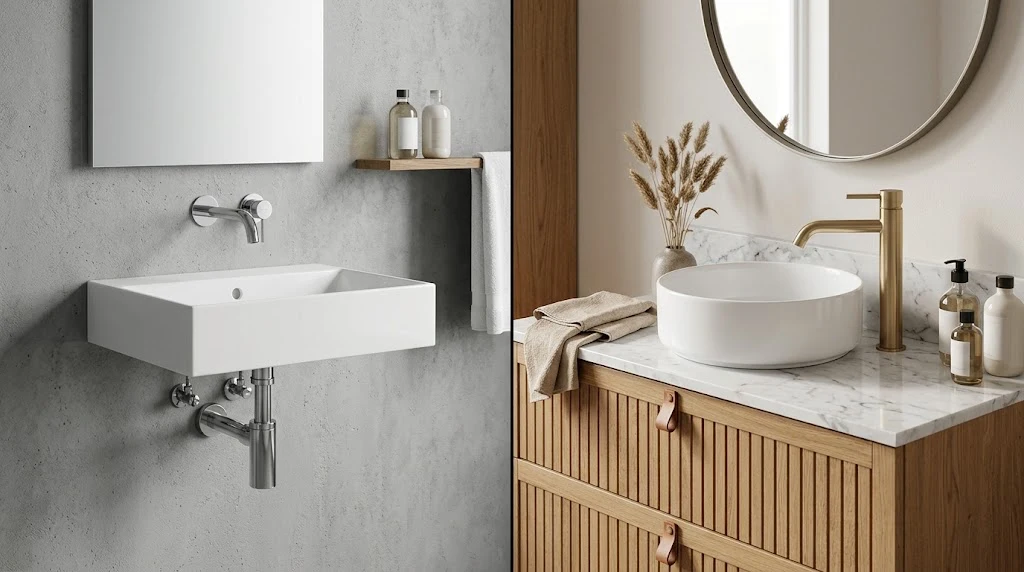
A Wall Hung Basin is mounted directly to the wall, leaving the space underneath open. A Countertop Basin is installed on a countertop, vanity, or customized bathroom furniture structure.
This structural difference directly affects:
- Bathroom layout
- Plumbing planning
- Storage options
- Product appearance
- Installation requirements
- Project construction methods
For B2B buyers, understanding these differences helps brands, designers, and contractors select the right basin solution.
| Comparison Factor | Wall Hung Basin | Countertop Basin |
|---|---|---|
| Installation | Wall-mounted installation | Countertop-mounted installation |
| Supporting Structure | Wall and mounting system | Countertop or bathroom vanity |
| Space Under Basin | Open space underneath | Usually occupied by vanity |
| Cabinet Requirement | Not always required | Usually requires countertop or cabinet |
| Plumbing Planning | Requires wall and drainage planning | Requires cabinet and countertop matching |
| Design Style | Minimalist, modern, lightweight | Decorative, furniture-oriented |
| Storage Space | Limited storage underneath | More storage possibilities |
| Project Consideration | Wall structure and mounting system | Countertop size and cabinet compatibility |
Wall Hung Basin: When Is It a Suitable Choice?
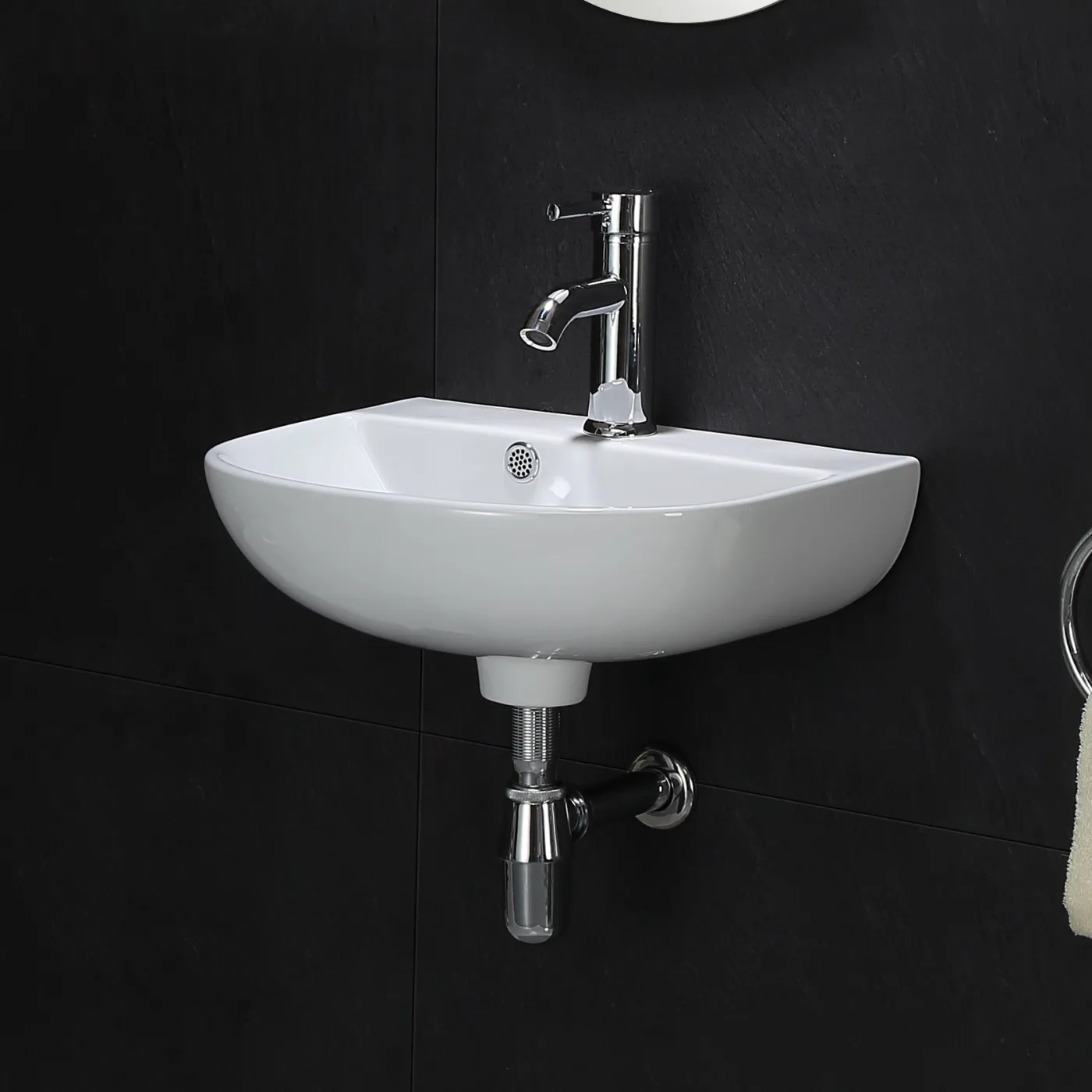
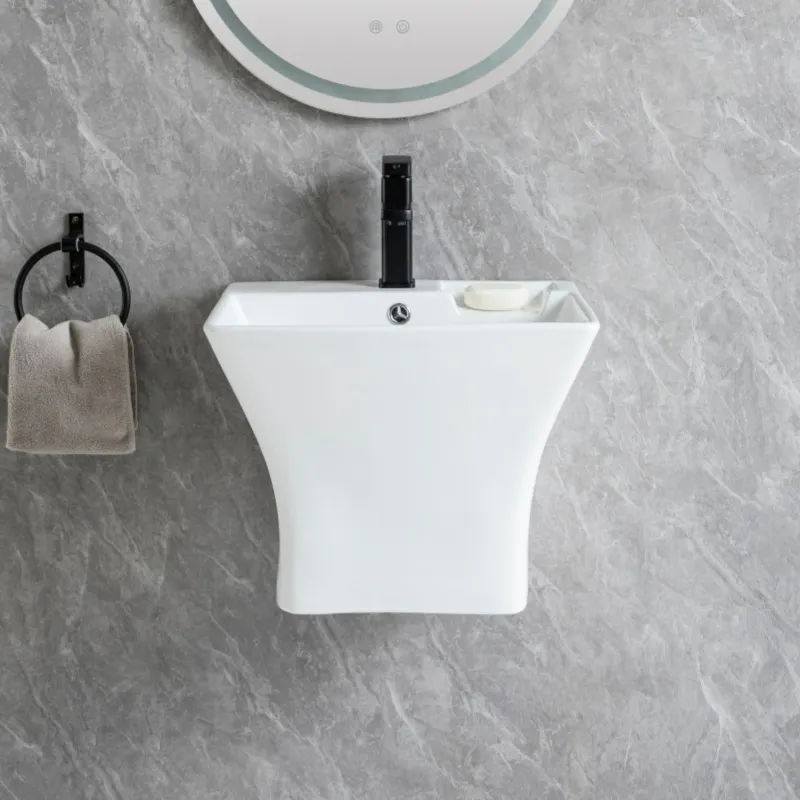
The key features of a Wall Hung Basin are wall installation and an open structure underneath.
For modern bathroom projects, this design reduces dependence on traditional vanity structures and allows the basin itself to become an independent design element.
Suitable for Minimalist Bathroom Designs
More bathroom brands are developing clean and modern product collections.
Because a Wall Hung Basin does not require a traditional vanity structure underneath, it creates a lighter visual appearance and works well for:
- Modern bathroom collections
- Minimalist residential projects
- Boutique hotels
- Contemporary apartment developments
For brands, the same basin model can also be developed into different product collections through:
- Shape
- Size
- Surface finish
- Color

Suitable for Projects Requiring Open Layouts
Since there is no cabinet underneath, a Wall Hung Basin keeps the floor area more visually open.
This feature makes it suitable for selected applications such as:
- Small residential bathrooms
- Guest bathrooms
- Hotel bathrooms
- Commercial bathroom spaces
However, buyers should understand that an open structure does not mean every project is suitable for a wall-mounted design.
If a project requires significant storage space or relies heavily on bathroom furniture, a Countertop Basin may be a better choice.
Installation Requirements Should Be Confirmed Early
Although a Wall Hung Basin has a simple appearance, installation planning is important.
Buyers should confirm:
- Wall structure
- Mounting points
- Drainage position
- Faucet configuration
- Installation height
For construction projects, accurate product drawings and installation information from manufacturers can help contractors plan wall structures and plumbing systems.
Countertop Basin: When Is It a Suitable Choice?
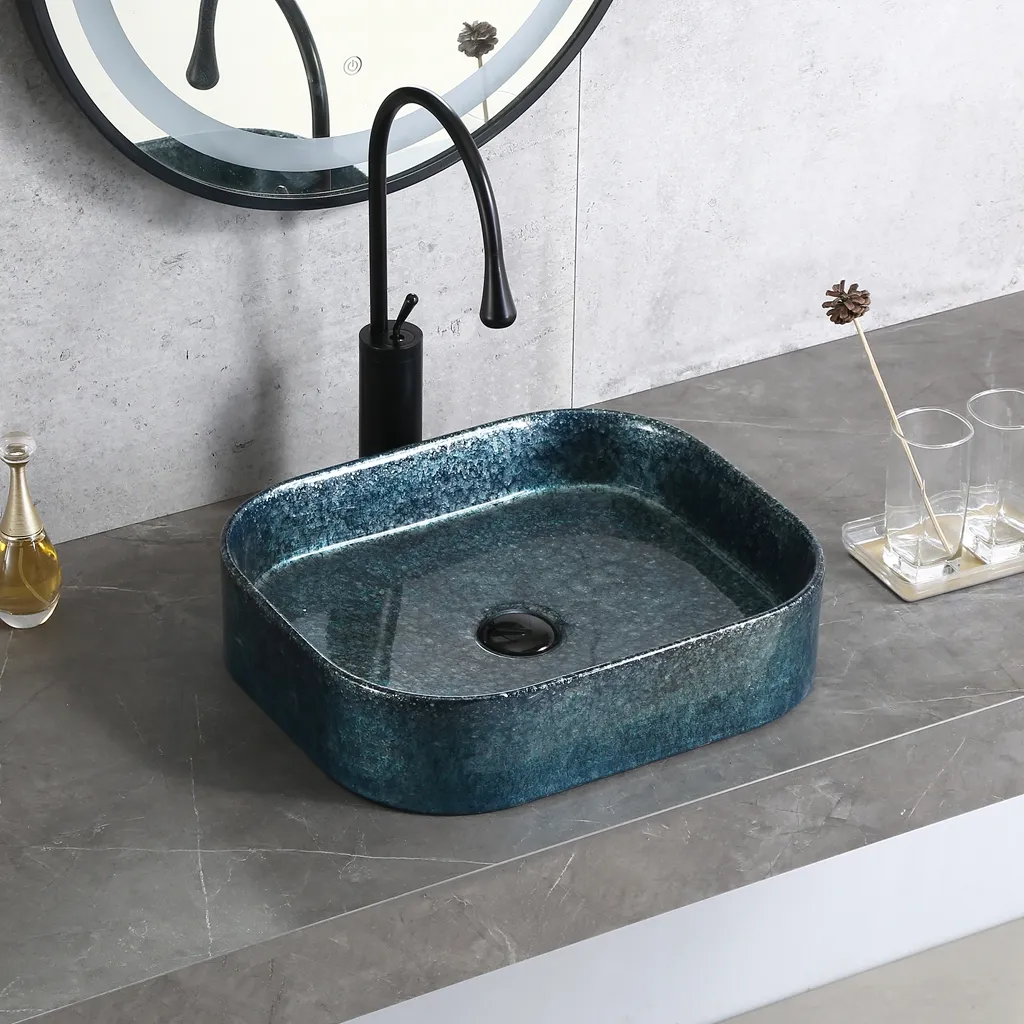
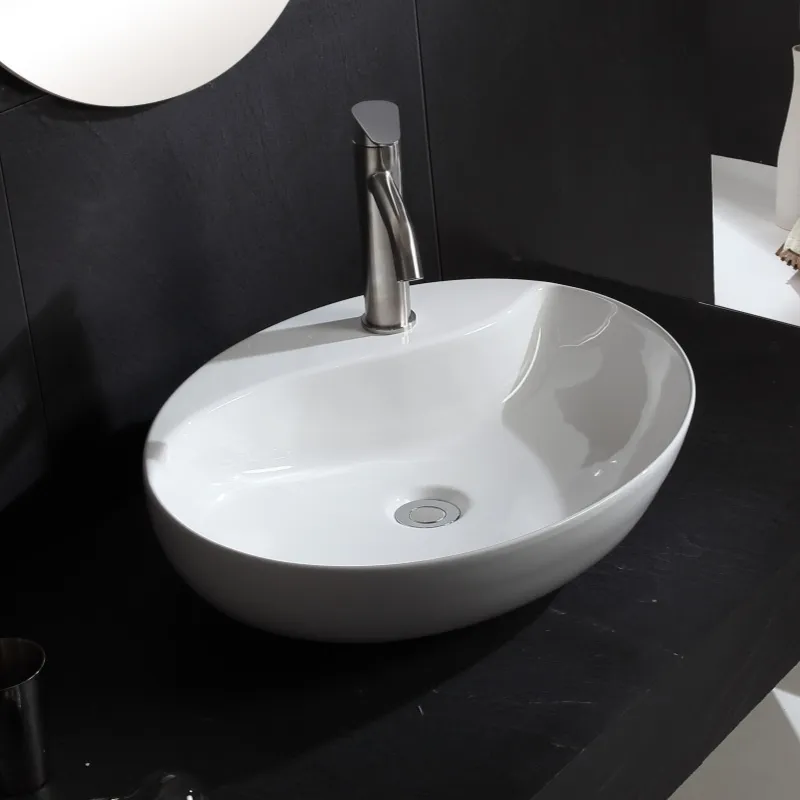
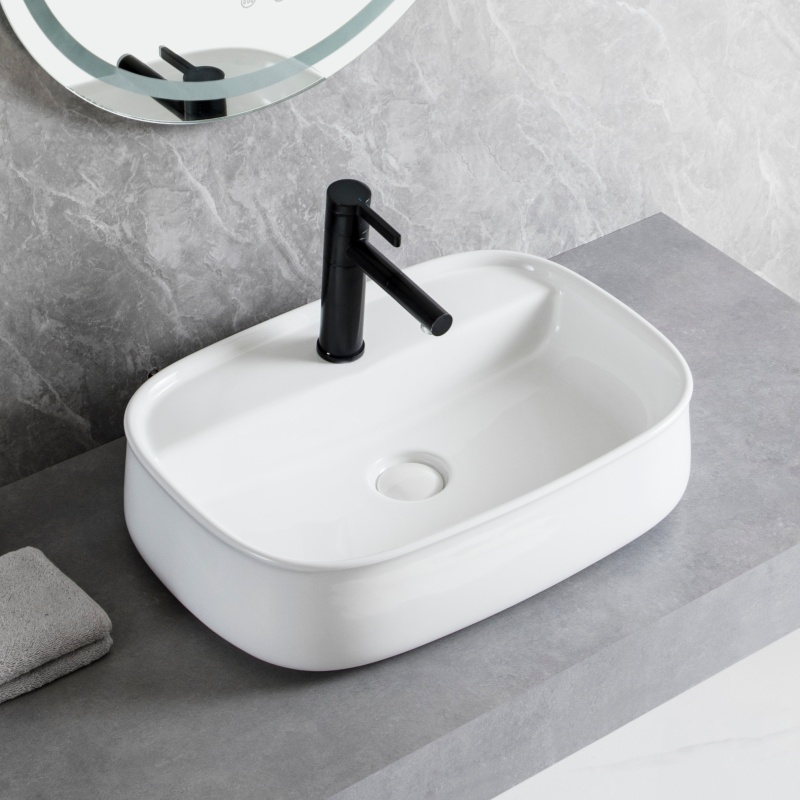
A Countertop Basin is installed on top of a countertop or bathroom vanity.
Compared with a wall-hung basin, its biggest advantage is the ability to integrate with cabinets and countertop designs.
Suitable for Vanity-Based Bathroom Designs
If a project requires:
- Bathroom cabinets
- Storage space
- Furniture-style bathroom designs
A Countertop Basin is often a suitable option.
For example, hotel suites, premium residential projects, and apartment developments often require bathrooms that provide both washing functions and storage solutions.
In these cases, the basin and vanity can form a complete design system.
More Flexibility in Decorative Design
Countertop Basins usually provide more flexibility in visual design.
Because the basin sits above the countertop, designers can create different bathroom styles through:
- Basin shape
- Countertop material
- Cabinet color
- Surface finish
For bathroom brands focusing on decorative collections and product differentiation, Countertop Basin is also a common choice.
Countertop Installation Requires Matching Components
Although Countertop Basin installation is relatively straightforward, buyers still need to confirm supporting requirements:
- Countertop cutout size
- Cabinet structure
- Faucet position
- Drainage components
- Basin dimensions
For bulk projects, confirming product compatibility before production can help improve installation efficiency.
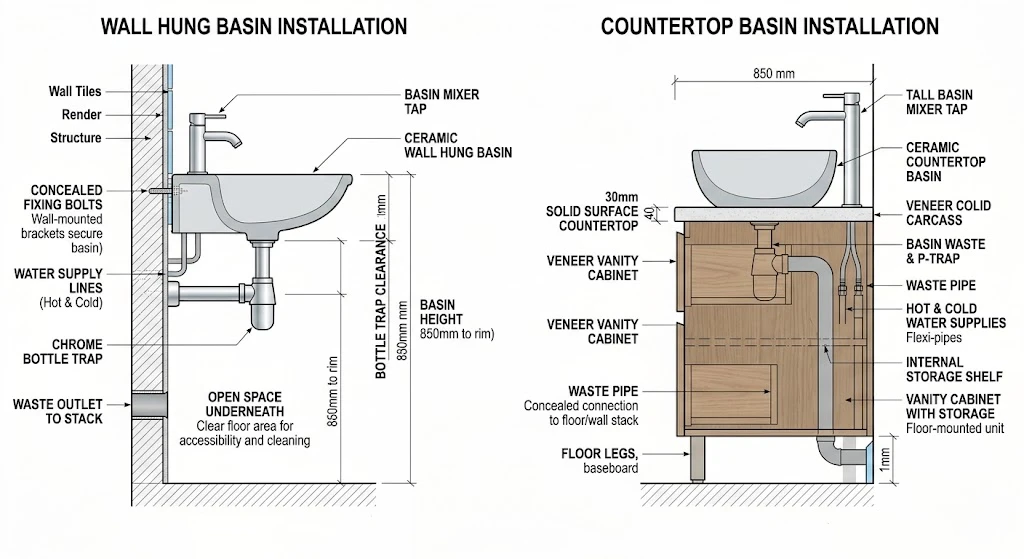
Wall Hung Basin vs. Countertop Basin: Installation Comparison
For B2B buyers, installation requirements are usually one of the most important factors when selecting a basin type.
Wall Hung Basin Installation
Main considerations include:
- Wall load capacity
- Mounting method
- Drainage position
- Wall plumbing planning
- Installation height
Advantages:
- Open bathroom layout
- Less dependence on cabinets
- Suitable for modern designs
Consideration:
- Requires more preparation before installation
Countertop Basin Installation
Main considerations include:
- Countertop size
- Cabinet structure
- Cutout position
- Faucet configuration
- Drain connection
Advantages:
- Easier integration with bathroom furniture
- More decorative design options
Consideration:
- Requires compatibility with countertop and vanity systems
Which Basin Type Fits Different Bathroom Projects?
Different projects have different requirements, so the suitable basin type also varies.
| Project Requirement | More Suitable Option |
|---|---|
| Open wall design | Wall Hung Basin |
| More bathroom storage | Countertop Basin |
| Minimalist bathroom collection | Wall Hung Basin |
| Furniture-style bathroom products | Countertop Basin |
| Hotel bathroom projects | Depends on layout and design requirements |
| Premium residential projects | Both options can work depending on the overall concept |
| Large-scale bathroom product collections | Depends on target market and installation habits |
For buyers, the goal is not to choose one fixed solution, but to select a basin type that matches project requirements and market positioning.
What Should B2B Buyers Consider Before Ordering?
When sourcing a wholesale wall-hung basin or Countertop Basin, buyers should confirm the following factors:
| Buying Factor | What to Confirm |
|---|---|
| Product Dimensions | Length, width, height, and installation size |
| Installation | Wall-mounted or countertop installation requirements |
| Plumbing | Drainage position and connection requirements |
| Faucet | Faucet hole configuration and installation method |
| Surface Finish | Glossy, matte, marble-effect, and other finishes |
| Customization | Size, color, logo, packaging, and other requirements |
For bulk purchasing, buyers should also confirm:
- Standard model or new product development
- Packaging requirements
- Production capacity
- MOQ
- Delivery schedule
For bathroom brands and wholesalers, choosing existing models can help control cost and delivery time. If special dimensions, structures, or designs are required, buyers should confirm development requirements with manufacturers in advance.
Can Wall Hung Basin and Countertop Basin Be Customized?
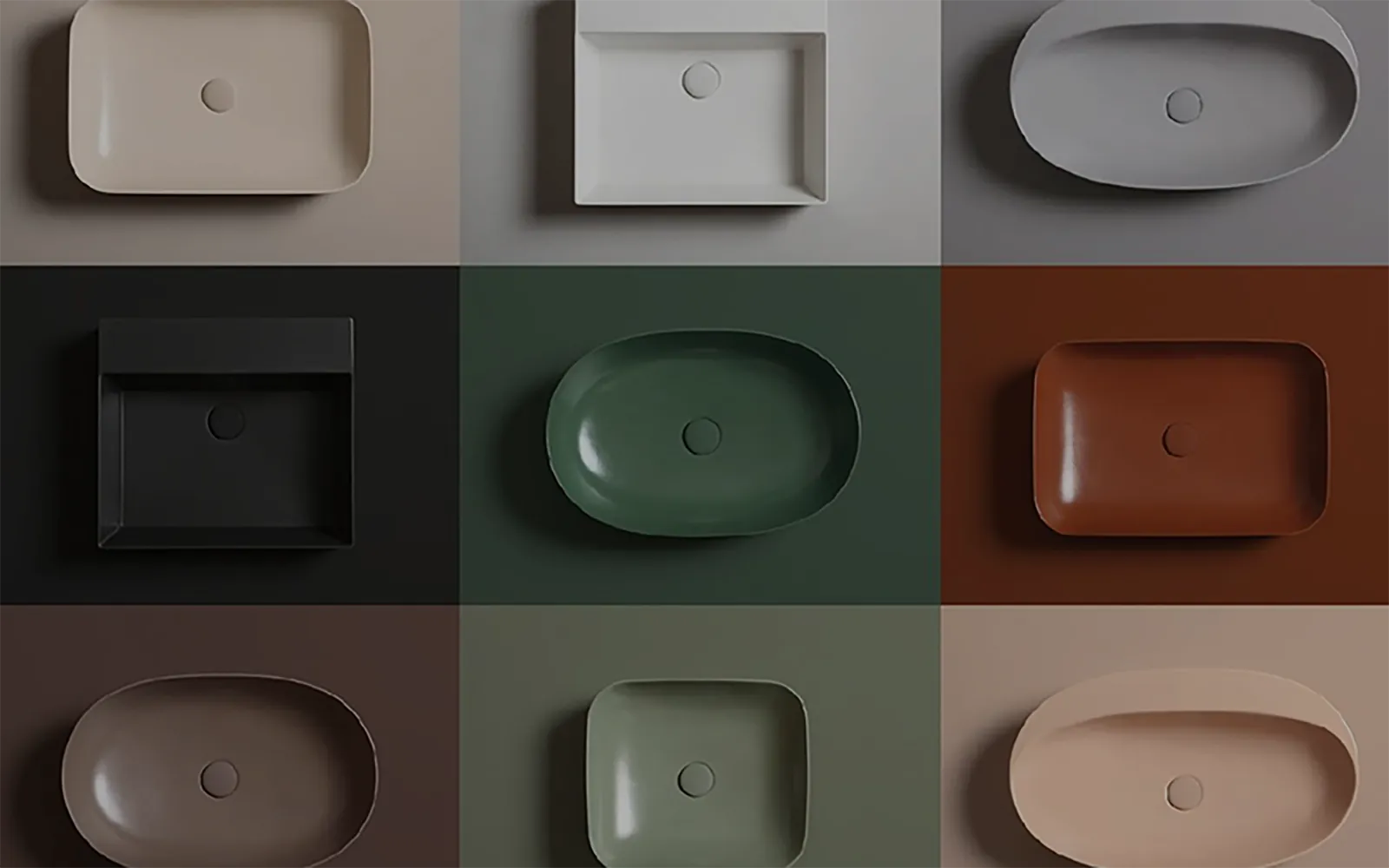
For brands and project buyers, ceramic bathroom sinks can be customized based on manufacturing capabilities.
Common customization options include:
- Basin shape
- Product dimensions
- Glaze color
- Matte or glossy finish
- Marble-effect surface
- Electroplated details
- Faucet-hole configuration
- Overflow design
- Brand logo
- Custom packaging
For buyers who want to quickly develop new product collections, selecting existing models and customizing finishes, colors, or packaging can be a more efficient approach.
If a project requires completely different structures or dimensions, it may involve sampling, new mold development, production costs, and longer lead times.
HanYu’s standard products usually support a minimum order quantity of 20 pcs per model. For customized requirements such as colors, dimensions, or special packaging, the MOQ can be adjusted according to actual sampling and production requirements.
FAQ About Wall Hung Basin vs. Countertop Basin
Is Wall Hung Basin better than Countertop Basin?
Neither option is universally better.
A Wall Hung Basin is suitable for projects requiring an open layout and modern design, while a Countertop Basin is more suitable for projects that require bathroom cabinets and additional storage.
The right choice depends on installation conditions, project requirements, and product positioning.
Does a Wall Hung Basin need a bathroom cabinet?
Not necessarily.
A Wall Hung Basin can be installed independently without a traditional vanity. However, buyers should confirm wall structure, mounting method, and plumbing requirements before installation.
Does a countertop basin require a vanity?
In most cases, yes.
A Countertop Basin is usually installed on a bathroom cabinet or countertop, so buyers need to confirm cabinet dimensions and countertop structure in advance.
Which basin type is easier for bathroom brands to customize?
Both basin types can be customized.
The available customization options depend on the manufacturer’s capabilities, including size adjustments, color development, surface finishes, logo printing, and packaging solutions.
About HanYu Ceramic Bathroom Sink Manufacturer
HanYu Sanitary Ware was established in 2002 and is an experienced Ceramic Bathroom Sink Manufacturer specializing in bathroom sink production and wholesale supply.
With years of manufacturing experience, HanYu has developed strong market presence in countries including South Korea, Brazil, the Netherlands, and Singapore. The company provides OEM/ODM services for global bathroom brands, wholesalers, distributors, and construction projects.
Whether you are sourcing wall-hung basins, countertop basins, or other ceramic bathroom sinks, HanYu can provide flexible product solutions based on your project requirements, including dimensions, designs, finishes, logos, and packaging.
If you are developing a new bathroom collection or looking for a reliable ceramic basin supplier, contact HanYu for product solutions, samples, and OEM/ODM support.