
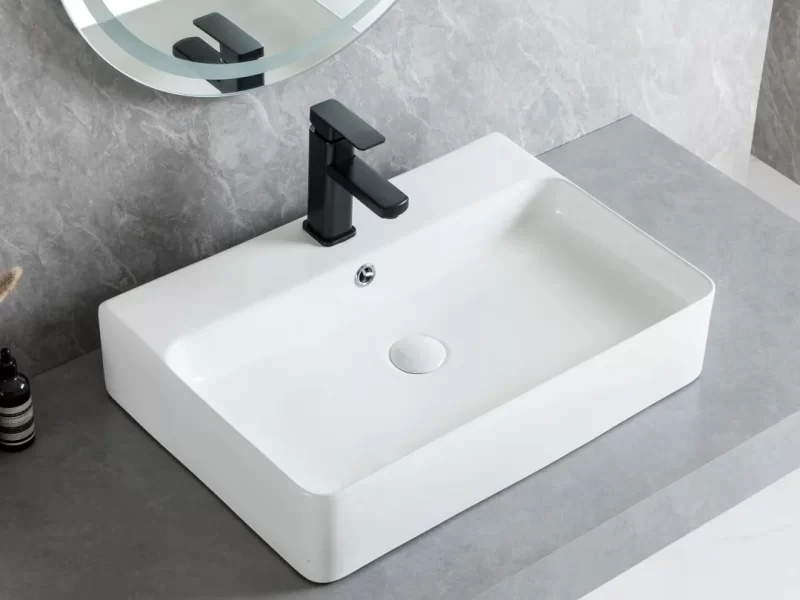
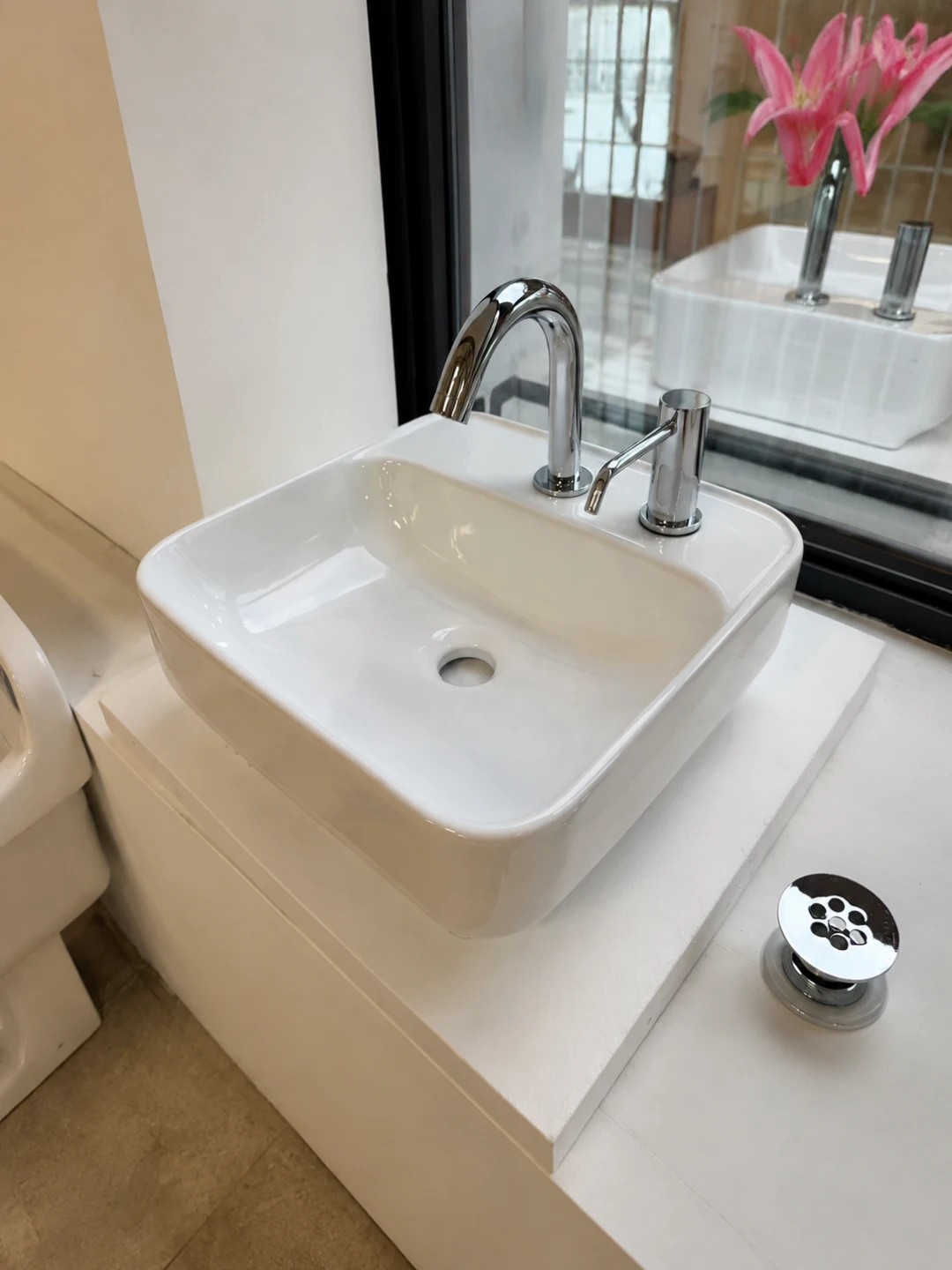
Before placing an order for a 卓上洗面器, buyers should clearly confirm requirements for faucet holes, overflow holes, soap dispenser holes, and other openings, and document the final configuration in product specifications, technical drawings, and purchase orders.
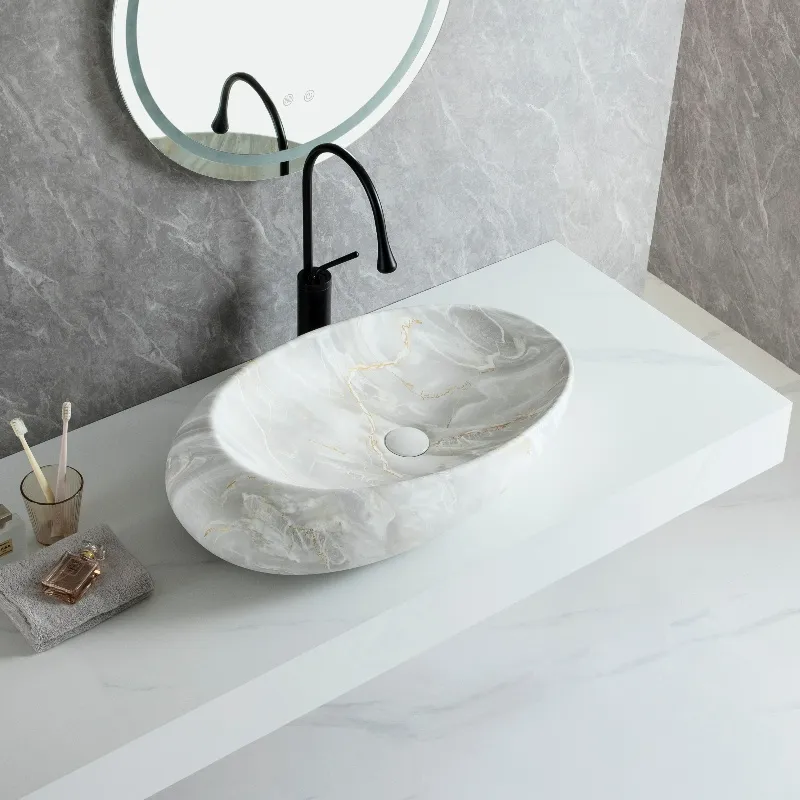
When purchasing countertop basins, the aspect most easily overlooked is often not the basin itself, but the hole configuration.
Two products may look identical, yet different hole configurations dictate different installation methods and usage scenarios.
例えば、こうだ:
Hotel projects may require a soap dispenser hole;
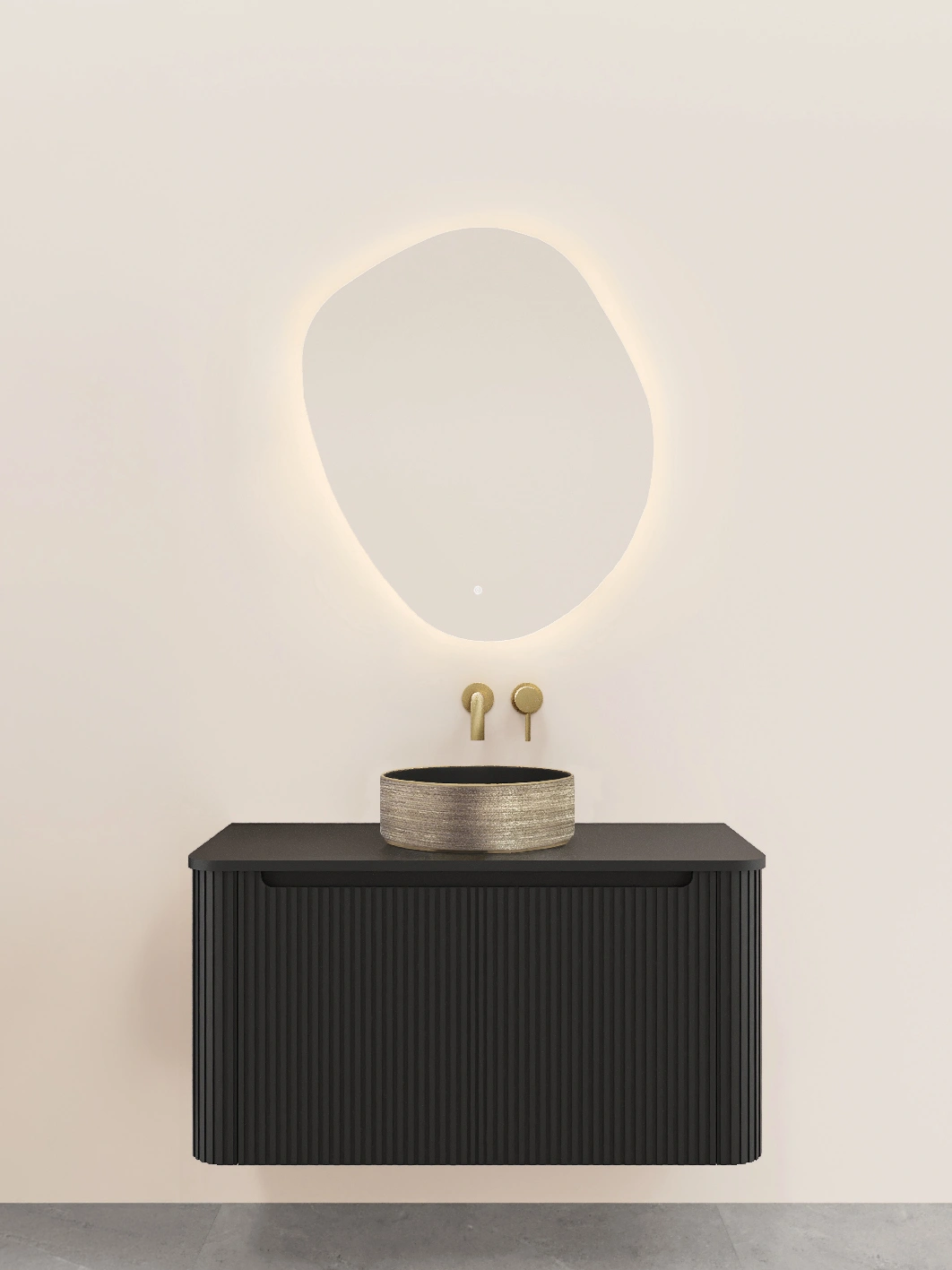
Residential projects might utilize wall-mounted faucets;
A specific brand may already have a designated faucet model that requires matching installation specifications.
If these details are not confirmed prior to ordering, issues often only come to light during sample installation or even on the actual project site.
Therefore, this article does not focus on defining what each hole is; instead, it addresses a more practical question from a buyer’s perspective:
Before ordering a countertop basin, how should buyers confirm the hole configuration?
Countertop Basin Hole Configurations: A Buyer’s Quick Guide
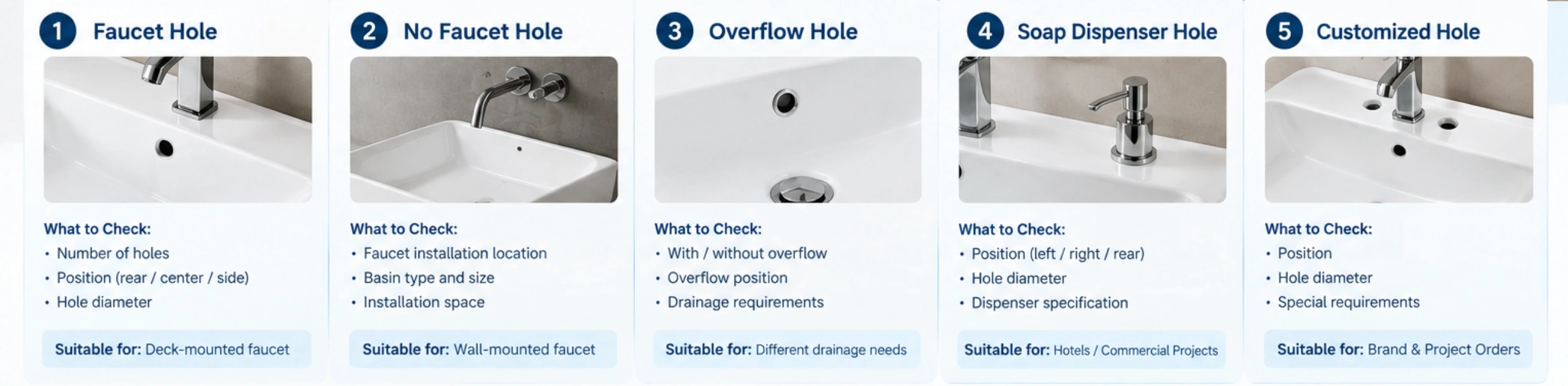
Start with this practical reference table:
| Configuration | What to Check | Suitable For |
|---|---|---|
| Faucet Hole | Number & Position | Deck-mounted faucet |
| No Faucet Hole | Faucet Installation Location | Wall-mounted faucet |
| Overflow Hole | With / Without | Different drainage requirements |
| Soap Dispenser Hole | Position & Diameter | Hotels / Commercial Projects |
| Customized Hole | Position & Specification | Brand & Project Orders |
Buyers can make a selection based on project needs before proceeding to confirm specific technical details.
Step 1: Confirm the Faucet Configuration
The first step is not simply asking the supplier, “What holes are available?”
Instead, first confirm:
How will the faucet be installed?
If using a deck-mounted faucet:
→ A faucet hole is usually required.
If using a wall-mounted faucet:
→ A “no faucet hole” configuration can be considered.
If the brand has already selected a specific faucet model, the process is even simpler. Send the faucet specifications directly to the basin supplier so they can match the basin accordingly.
For B2B procurement, this is generally more reliable than trying to judge compatibility based solely on product photos.
Step 2: Decide Whether You Need an Overflow Hole
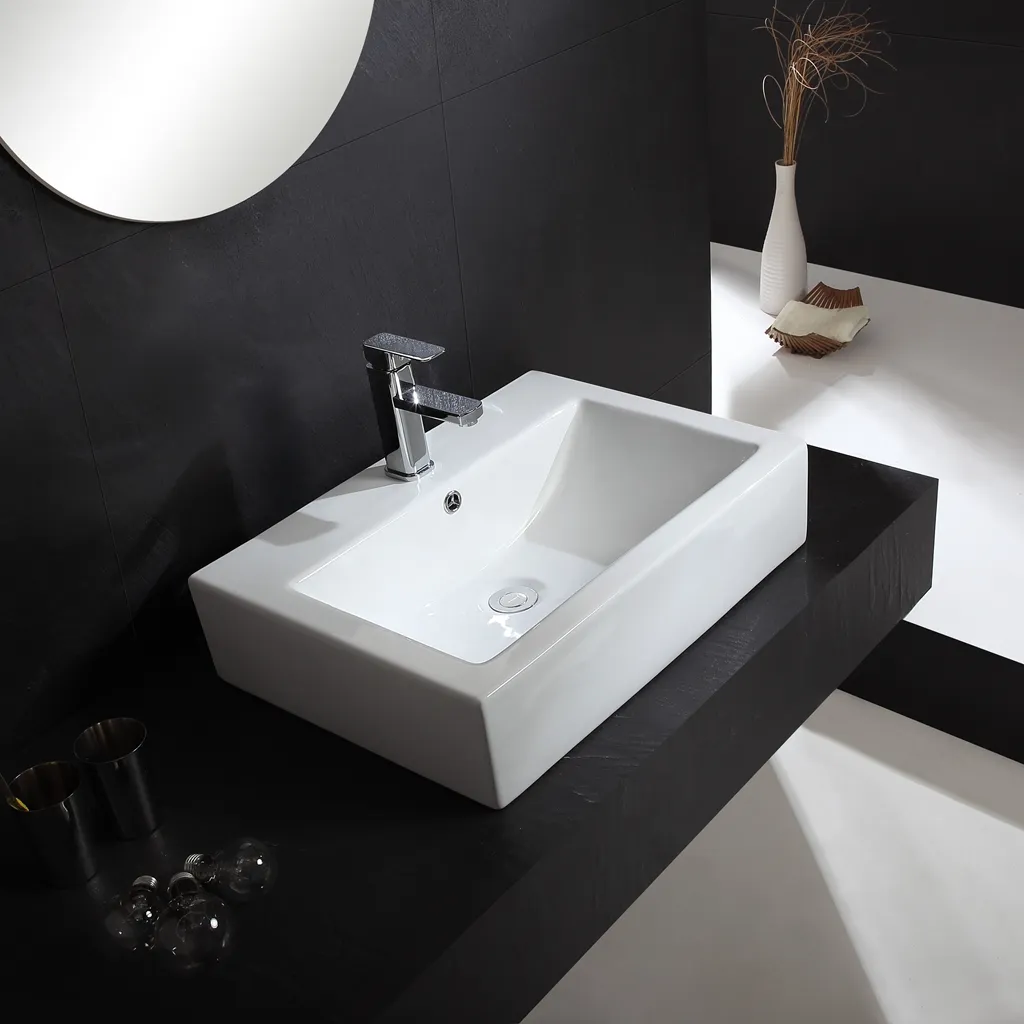
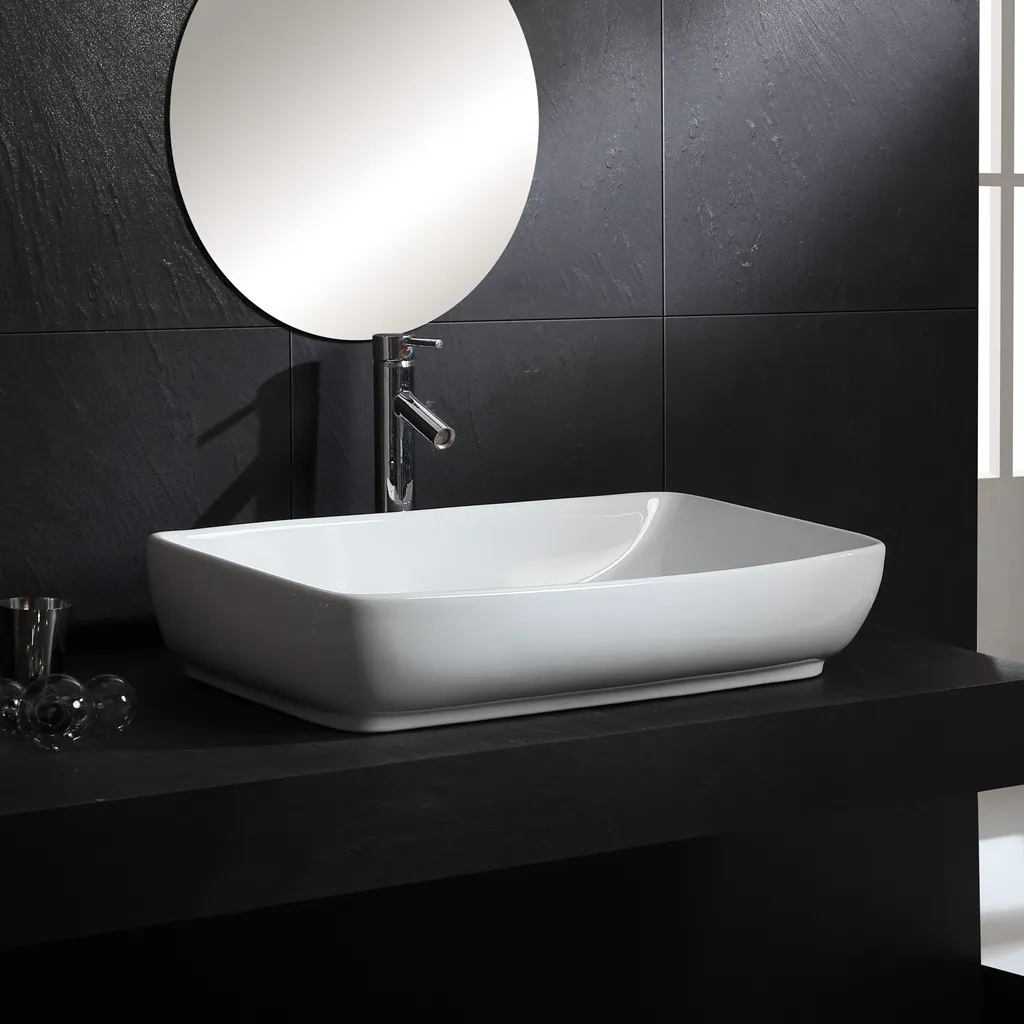
Next, address the overflow requirement.
Buyers need to clarify:
With Overflow or Without Overflow?
This configuration should be determined based on specific project requirements.
Especially for commercial projects, it is not advisable to let the supplier make a “default choice.”
This is because different projects may have varying:
- Drainage designs;
- Installation requirements;
- Product specifications.
Therefore, when confirming samples, it is best to document the overflow status as part of the product configuration.
Step 3: Check for a Soap Dispenser Hole
For commercial projects such as hotels, restaurants, or office buildings, buyers also need to consider:
Does the basin need a soap dispenser hole?
If not required:
→ No need to add an extra hole.
If required:
→ Confirm the position and diameter in advance.
It is particularly important to note that the soap dispenser is not necessarily supplied by the basin manufacturer.
If the dispenser comes from a different supplier, the buyer should provide the following details to the basin supplier in advance:
- Installation drawing;
- Hole diameter;
- Mounting requirements.
This prevents compatibility issues between the products from the two suppliers.
Step 4: Confirm “No-Hole” Requirements
Many projects actually require:
“Do not add this hole.”
例えば、こうだ:
Wall-Mounted Faucet
Usually does not require a faucet hole.
Minimalist Bathroom Design
The brand may prefer a cleaner, simpler look for the basin.
Custom Countertop Installation
The faucet is already installed on the countertop.
Therefore, it is best to explicitly state the following in the purchase order:
No Faucet Hole
…rather than simply omitting the detail.
In bulk procurement, “no mention” is very different from “explicitly requesting no hole.”
Step 5: Consider Customized Hole Configurations
If an existing product’s hole configuration already meets your needs, it is recommended to prioritize the standard configuration. If there are only minor specification differences—such as:
- Faucet hole location;
- Hole diameter;
- Soap dispenser location;
- Specific color;
- Packaging method;
…you can ask the supplier if they can make slight adjustments to an existing product.
HanYu’s OEM/ODM partnerships primarily operate on this model:
Start with an existing model and adjust what the project actually needs.
This approach is ideal for brands and project purchasers looking to control:
- Development costs;
- MOQ (Minimum Order Quantity);
- Lead times;
- Product risks.
A Practical Example for Hotel Buyers
Imagine a hotel project sourcing a countertop basin.
Project requirements:
- Deck-mounted faucet;
- Soap dispenser;
- Standard drainage configuration.
The purchaser can organize the requirements as follows:
| Item | Requirement |
|---|---|
| 盆地 | Existing Countertop Basin Model |
| Faucet | Deck-mounted |
| Faucet Hole | Required |
| Faucet Hole Position | Confirmed based on faucet |
| Overflow | Project requirement |
| Soap Dispenser | Required |
| Dispenser Hole | Position + Diameter |
| Quantity | Project quantity |
| Sample | Required before bulk production |
Once the supplier receives this information, they can quickly determine if the product is a match.
For Bathroom Brands: Avoid Too Many Configurations
If you are a bathroom brand, there is another issue to consider:
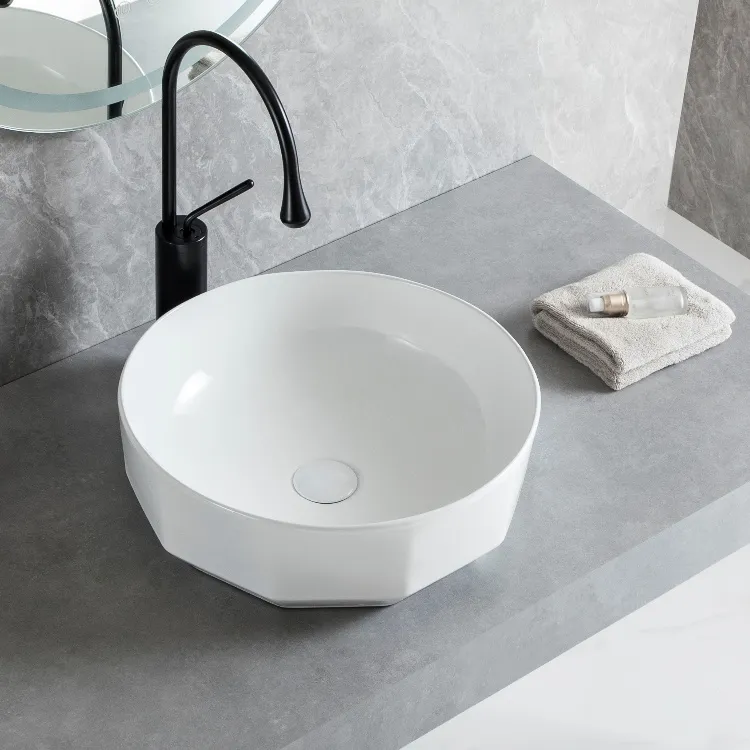
Should every hole configuration be created as a separate SKU?
Generally, this is not recommended.
For example, take a single basin model:
- Rear faucet hole;
- Center faucet hole;
- No faucet hole;
- Soap dispenser hole;
If each variation becomes a separate SKU, the product line will quickly become overly complex.
A more rational approach is:
Standard Model
Mainstream configuration.
Alternative Configuration
Targeting specific market demands.
Project Adjustment
Minor adjustments made for specific project orders.
This keeps the product series clear and makes inventory management easier.

For Project Buyers: Confirming the Complete Basin Specification
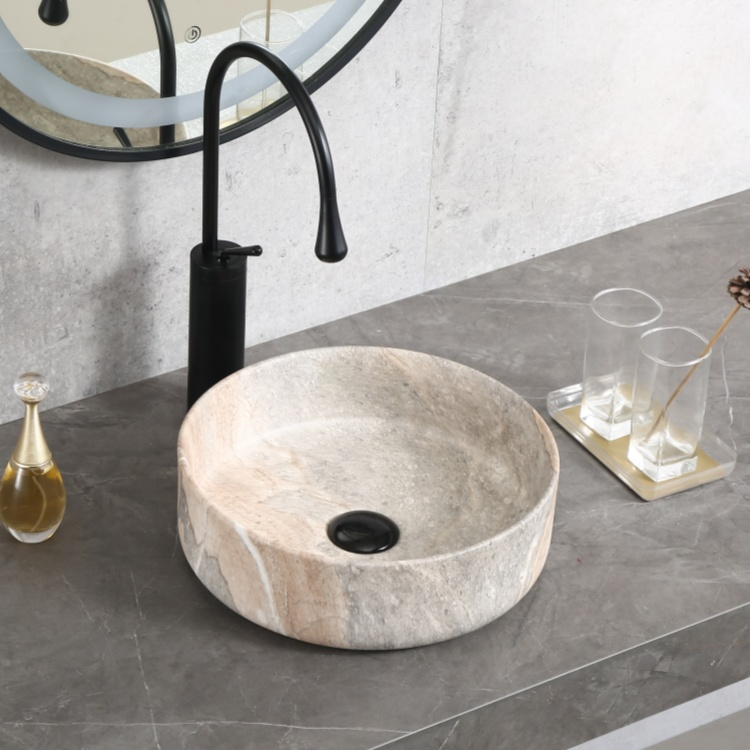
In project procurement, it is crucial to avoid “fragmented information.”
Designers confirm the faucet;
Purchasers confirm the basin;
Construction teams confirm the drainage;
The hotel operator requests a soap dispenser.
Without a unified specification sheet, version inconsistencies easily arise.
Therefore, it is recommended to compile a comprehensive record before purchasing:
盆地
- Model
- サイズ
- カラー
- Finish
Faucet
- タイプ
- Hole requirement
- Installation position
Drainage
- Overflow
- Drainage requirement
アクセサリー
- Soap Dispenser
- Other accessories
Finally, the purchasing team confirms:
Final Configuration Approved
Only then does mass production begin.
What Should Be Included in the Purchase Order?
To minimize follow-up communication, the Purchase Order should not simply state:
Countertop Basin × 500 pcs
Instead, it should specify:
Model: HY-XXXX
Faucet Hole: Yes
Position: Rear
Overflow: With / Without
Soap Dispenser Hole: Yes / No
Color: ホワイト
Finish: Gloss
Packaging: Confirmed
For OEM/ODM orders, you can also attach:
Approved Technical Drawing
This ensures that the purchasing, supplier, and production teams are all working from the same version.
Factory Perspective: Why Existing Models Can Simplify Projects
For a factory, “standard products” do not imply a lack of flexibility.
If an existing countertop basin already meets most project requirements, adapting a mature model is often more efficient.
HanYu can discuss adjustments based on specific product structures and production requirements, such as:
- Faucet hole;
- Hole configuration;
- Color;
- Packaging;
- Selected surface finish.
However, the feasibility of adjustments must be evaluated based on the specific existing model.
This means buyers do not necessarily need to submit a full new product development request from the start.
A more practical approach is:
Choose → Check → Adjust → Sample → Produce
Buyer’s Final Hole Configuration Checklist
Before submitting a bulk order, buyers can quickly verify the following:
Faucet
- Deck-Mounted or Wall-Mounted
- Faucet Hole: Yes / No
- Hole Position
- Hole Diameter
Overflow
- With Overflow
- Without Overflow
Soap Dispenser
- Required
- Not Required
- Position Confirmed
- Diameter Confirmed
Final Approval
- Basin Model Confirmed
- Technical Drawing Approved
- Sample Approved
- Final Configuration Added to PO
Confirming this information in advance streamlines communication during the bulk purchasing process.
Why Choose HanYu for Countertop Basin Projects?
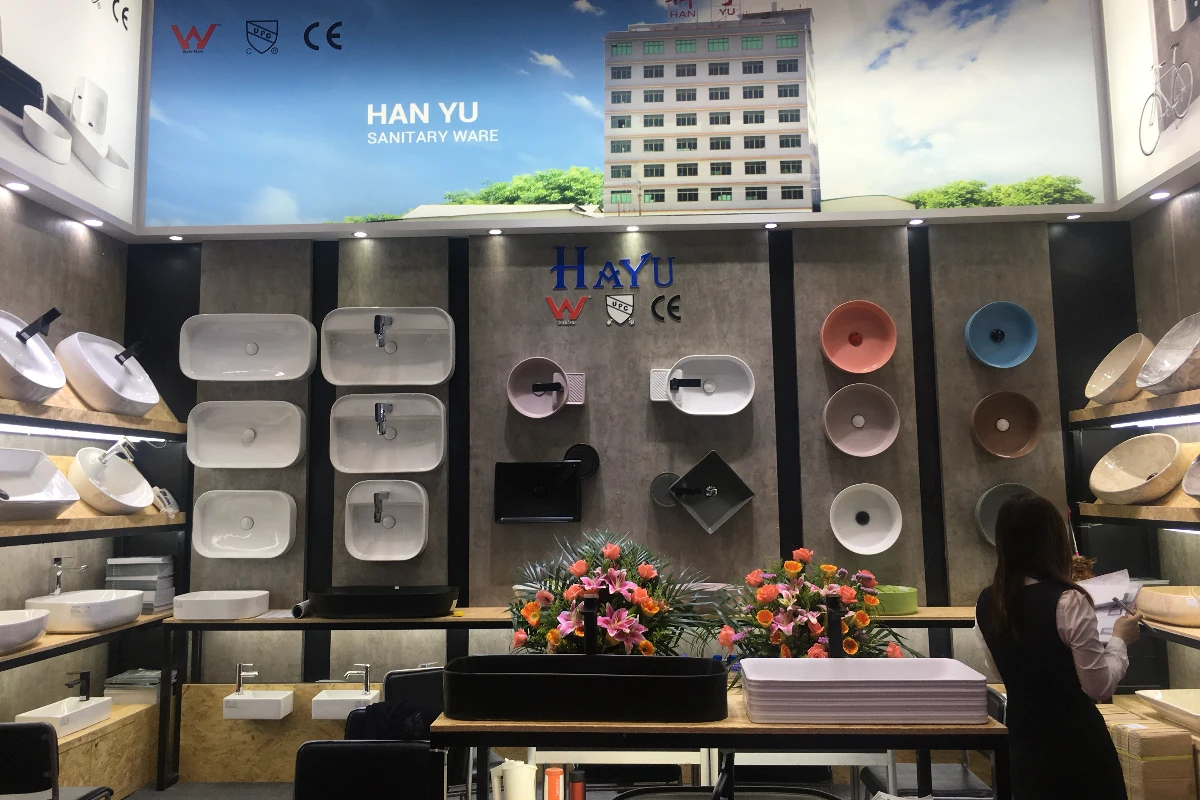
2002年設立、, ハンユー衛生陶器 はプロフェッショナルである。 セラミックバスルームシンク メーカー. With years of experience in production and wholesale, we provide OEM/ODMサービス to global brands and construction projects.
For countertop basin projects, HanYu specializes in a “standard product + minor customization“ approach.
Buyers can select products from our existing catalog that meet project requirements and then discuss specific adjustments, such as:
- Faucet hole configuration;
- Minor specification adjustments;
- Color;
- Packaging;
- Surface finish.
The minimum order quantity (MOQ) for standard items is typically 20 pieces per model. For customization requests regarding color, dimensions, or special packaging, the MOQ will be adjusted based on specific prototyping and production requirements.
If you already have complete basin specifications, faucet requirements, or a project procurement list, please share them directly with HanYu. We can identify suitable solutions from our existing product line and assess customization needs based on the product structure, helping brands and project buyers complete bulk purchases more efficiently.
FAQ: Countertop Basin Hole Configurations
What should buyers confirm before ordering a countertop basin?
It is recommended to confirm the presence, location, and specifications of faucet holes, overflow holes, soap dispenser holes, and any other special hole configurations.
Does a countertop basin always need a faucet hole?
No. Projects utilizing wall-mounted faucets can typically opt for a “no faucet hole” configuration.
Do hotel countertop basins need soap dispenser holes?
Not necessarily. The need depends on the hotel’s bathroom configuration and the chosen soap dispenser installation method.
Can an existing basin model be slightly customized?
Feasibility can be assessed based on the specific product structure and manufacturing requirements. HanYu specializes in making minor custom adjustments to existing product models.
Should hole configurations be included in the purchase order?
It is recommended to clearly specify these in the purchase order (PO) and—ideally—attach a confirmed technical drawing to minimize communication errors during mass production and installation.
What information should I send to HanYu for a basin project?
You can provide the following:
- Existing basin model;
- Faucet specifications;
- Required hole configuration;
- Color or finish;
- Packaging requirements;
- Estimated order quantity.
Based on this information, ハンユー can help determine if existing products are suitable and identify which requirements can be met through minor adjustments.