The cancellation of China’s Export Tax Rebate will reshape export costs, pricing strategies, and global sourcing decisions. For buyers of wholesale ceramic sinks, understanding cost changes, supplier responses, and future market trends is essential for building stable and competitive supply chains.
Export Tax Rebate Cancellation: What Global Buyers Need to Know
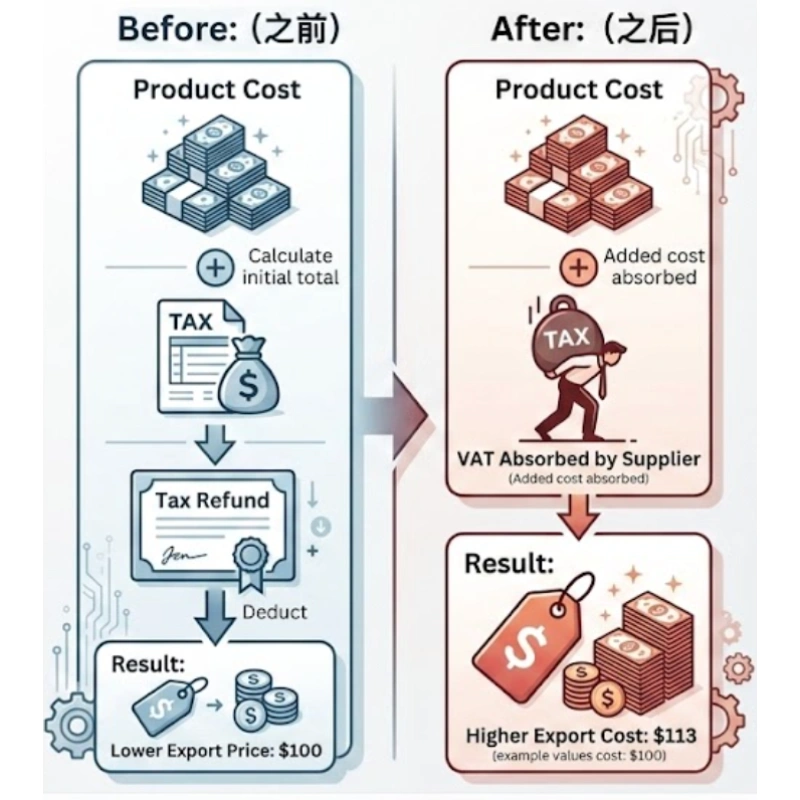
Starting April 1, 2026, China will abolish export tax rebates for ceramics. The Export Tax Rebate policy previously allowed manufacturers to recover the VAT paid during domestic production, helping exporters reduce costs and offer more competitive international prices.
For ceramic manufacturers and global buyers of wholesale ceramic sinks, this policy change means that previous tax advantages will no longer exist. Exporters must absorb the additional VAT cost or adjust product prices to maintain profitability.
For example, under a 13% tax rate:
- With a 13% Export Tax Rebate, the full input VAT is refunded, meaning the export cost equals the tax-exclusive product value.
- Without the rebate, the input VAT becomes part of the production cost, increasing export costs by approximately 13%.
After the cost increase, three possible outcomes may occur:
- Sellers absorb the additional cost and accept lower profits.
- Buyers accept higher purchasing prices.
- Both sides share the additional cost through negotiation.
The final impact depends on market competition, product value, supplier strength, and buyer relationships.
Impact of Export Tax Rebate Cancellation on Ceramic Export Sellers
1. Short-Term Challenges for Manufacturers and Exporters
Gross Margin Pressure for Low-Profit Businesses
Many traditional manufacturing industries operate with relatively low gross margins, often around 3%-6%. Previously, the Export Tax Rebate acted as an important profit support mechanism.
After cancellation, companies with limited profit margins may face immediate financial pressure. Small and medium-sized ceramic factories, especially those competing mainly through price, may experience declining profitability when fulfilling export orders.
For manufacturers producing wholesale ceramic sinks, tableware, and other daily-use ceramics, maintaining cost efficiency and improving product value will become increasingly important.
Forced Price Adjustments Reduce Export Competitiveness
Without the Export Tax Rebate, exporters may need to increase prices by approximately 9%-13% depending on the previous rebate level.
However, overseas buyers usually compare suppliers globally. When Chinese suppliers increase prices, importers may:
- Request lower quotations.
- Delay purchasing decisions.
- Compare alternative suppliers from other countries.
- Reduce order quantities.
For suppliers without strong brands, technology advantages, or long-term customer relationships, transferring all additional costs to buyers becomes difficult.
Increased Cash Flow Pressure
Export tax rebates previously provided manufacturers with stable cash flow support. After cancellation, companies may face:
- Higher working capital requirements.
- Increased raw material payment pressure.
- More inventory financing needs.
- Higher borrowing costs.
Ceramic manufacturers producing wholesale ceramic sinks must improve financial management and supply chain efficiency to maintain stable operations.
Potential Export Order Decline
When Chinese export prices rise, overseas buyers may explore alternative production locations, including Vietnam, India, Indonesia, Mexico, and other manufacturing regions.
Standardized and highly competitive products may experience stronger supplier diversification trends. Companies producing low-value-added ceramic products could face greater pressure after the Export Tax Rebate adjustment.
Accelerated Industry Consolidation
The policy change may accelerate market differentiation:
Small and medium-sized enterprises:
- May reduce production capacity.
- Shift toward domestic markets.
- Seek partnerships or acquisition opportunities.
Industry-leading manufacturers:
- Benefit from stronger production capabilities.
- Maintain stable international customers.
- Use branding, technology, and overseas networks to reduce risks.
Long-Term Opportunities After Export Tax Rebate Adjustment
1. Moving Away from Low-Price Competition
For many years, some exporters used tax rebate advantages to offer extremely competitive prices, creating intense price competition.
The cancellation of the Export Tax Rebate may reduce excessive price competition and encourage companies to compete through:
- Product quality.
- Design capability.
- Manufacturing technology.
- Customer service.
- Brand development.
For the ceramic industry, this creates opportunities for professional suppliers offering reliable wholesale ceramic sinks and customized solutions.
2. Reduced International Trade Dispute Risks
Some overseas markets have viewed high export tax rebates as a form of government-supported pricing advantage.
After the Export Tax Rebate is removed, Chinese exporters may face fewer accusations related to unfair subsidies, potentially reducing risks from anti-dumping and countervailing measures.
This could create a more stable international trading environment for ceramic exporters and global buyers.
3. Encouraging Manufacturing Upgrades
Manufacturers will need to focus more on:
- Developing higher-value ceramic products.
- Improving production technology.
- Creating stronger international brands.
- Providing customized OEM/ODM services.
For ceramic bathroom suppliers, future competitiveness will depend less on price and more on innovation, quality control, and supply chain capabilities.
4. Changing Global Trade Models
The policy adjustment may encourage companies to explore:
- Overseas production facilities.
- Local warehouses.
- Regional supply networks.
- More flexible international trade models.
General export trade may face greater pressure, while companies with global supply chain strategies will have stronger advantages.
Impact on Overseas Buyers of Wholesale Ceramic Sinks
1. Higher Purchasing Costs
The most direct impact for overseas buyers is increased procurement costs.
The price increase of Chinese ceramic products may be close to the previous Export Tax Rebate rate, mainly around 9%-13%.
For importers purchasing wholesale ceramic sinks, higher purchase prices may affect:
- Inventory budgets.
- Retail pricing strategies.
- Distributor profit margins.
- Project cost calculations.
2. Profit Margin Pressure
Buyers will face two choices:
Increase Retail Prices
Passing higher costs to end customers may protect profit margins but could reduce sales volume and market competitiveness.
Absorb Higher Costs
Keeping existing market prices means importers and distributors must accept lower profit margins.
Small distributors with limited negotiation power may experience greater pressure.
3. Supplier Diversification and Sourcing Changes
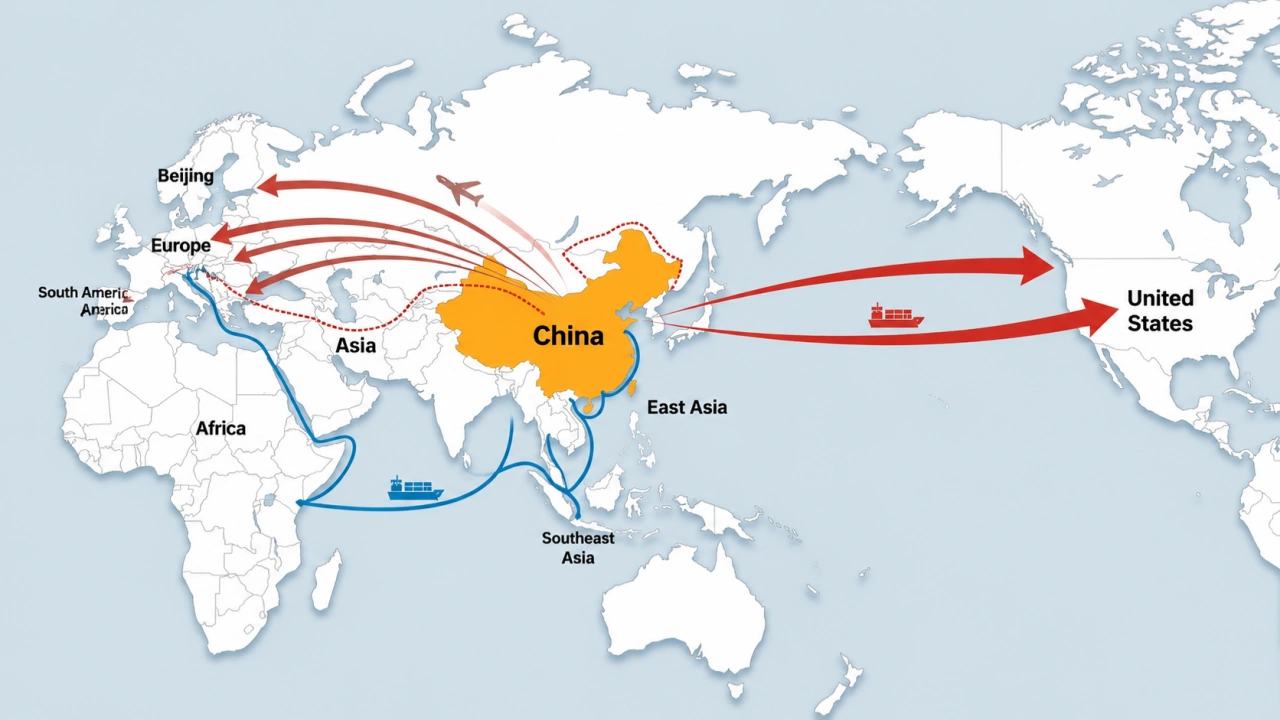
After the Export Tax Rebate cancellation, buyers may compare suppliers from different regions.
Potential alternative sourcing markets include:
- Vietnam.
- Indonesia.
- India.
- Mexico.
However, supplier replacement depends on product complexity, quality requirements, production capacity, and delivery reliability.
For products like wholesale ceramic sinks, buyers must consider more than price, including:
- Manufacturing experience.
- Quality consistency.
- Customization ability.
- Certification compliance.
- Delivery performance.
Different Cost-Sharing Scenarios After Export Tax Rebate Cancellation
Scenario 1: China Maintains Global Market Dominance
For products where China has strong manufacturing advantages and limited global alternatives:
- Sellers maintain stronger pricing power.
- Overseas buyers accept most price increases.
- Supplier profits decline only slightly.
Scenario 2: Highly Competitive Industries
For industries with many suppliers and lower entry barriers, such as some ceramic products:
- Buyers have more choices.
- Sellers absorb more cost increases.
- Profit margins decline significantly.
Manufacturers producing wholesale ceramic sinks must improve differentiation instead of relying only on price competition.
Scenario 3: Long-Term Strategic Partnerships
For suppliers and buyers with stable cooperation:
- Costs may be shared through negotiation.
- Both sides maintain long-term business relationships.
- Order volumes remain relatively stable.
For example, if a previous rebate advantage represented a 9% cost benefit, buyers may accept a 6% price increase while suppliers absorb the remaining 3%.
How Ceramic Buyers Can Respond to Export Tax Rebate Changes
Global buyers can reduce risks by:
- Building long-term partnerships with reliable manufacturers.
- Evaluating suppliers based on quality rather than only price.
- Negotiating flexible purchasing agreements.
- Increasing supply chain transparency.
- Selecting manufacturers with strong OEM/ODM capabilities.
For wholesale ceramic sinks, working with experienced suppliers can help buyers maintain stable quality, competitive pricing, and reliable delivery despite market changes.
FAQ About Export Tax Rebate and Ceramic Exports
What is Export Tax Rebate?
Export Tax Rebate is a policy that allows exporters to recover VAT paid during domestic production. It helps reduce export costs and improve international competitiveness.
How will Export Tax Rebate cancellation affect ceramic prices?
Without the Export Tax Rebate, ceramic exporters may face higher production costs. Depending on negotiation results, these costs may be shared between suppliers and overseas buyers.
Will overseas buyers stop sourcing ceramic products from China?
Not necessarily. Buyers may compare alternative suppliers, but China still has advantages in manufacturing capacity, supply chain integration, product variety, and customization services.
How can wholesale ceramic sinks buyers reduce cost risks?
Buyers can reduce risks by choosing experienced manufacturers, establishing long-term cooperation, optimizing order planning, and focusing on total value rather than only unit price.
Partner with HanYu for Reliable Wholesale Ceramic Sinks
HanYu Sanitary Ware is an experienced Ceramic Bathroom Sink Manufacturer established in 2002. With years of expertise in bathroom sink production and wholesale supply, HanYu has built strong market recognition in countries including South Korea, Brazil, the Netherlands, and Singapore.
HanYu provides global brands, distributors, and construction projects with professional OEM/ODM services and flexible bathroom sink customization solutions. With strong manufacturing capabilities, quality control systems, and international export experience, HanYu helps customers build stable ceramic bathroom product supply chains.
As the global ceramic industry adapts to Export Tax Rebate changes, choosing a reliable manufacturing partner becomes increasingly important. Contact HanYu today to explore customized wholesale ceramic sink solutions for your market.